Trends in modern construction: technologies, materials and new standards for building operation
Overview of modern construction trends: new technologies, dry installation, energy efficiency, fire safety, durability of materials and comprehensive finishing systems for public buildings.
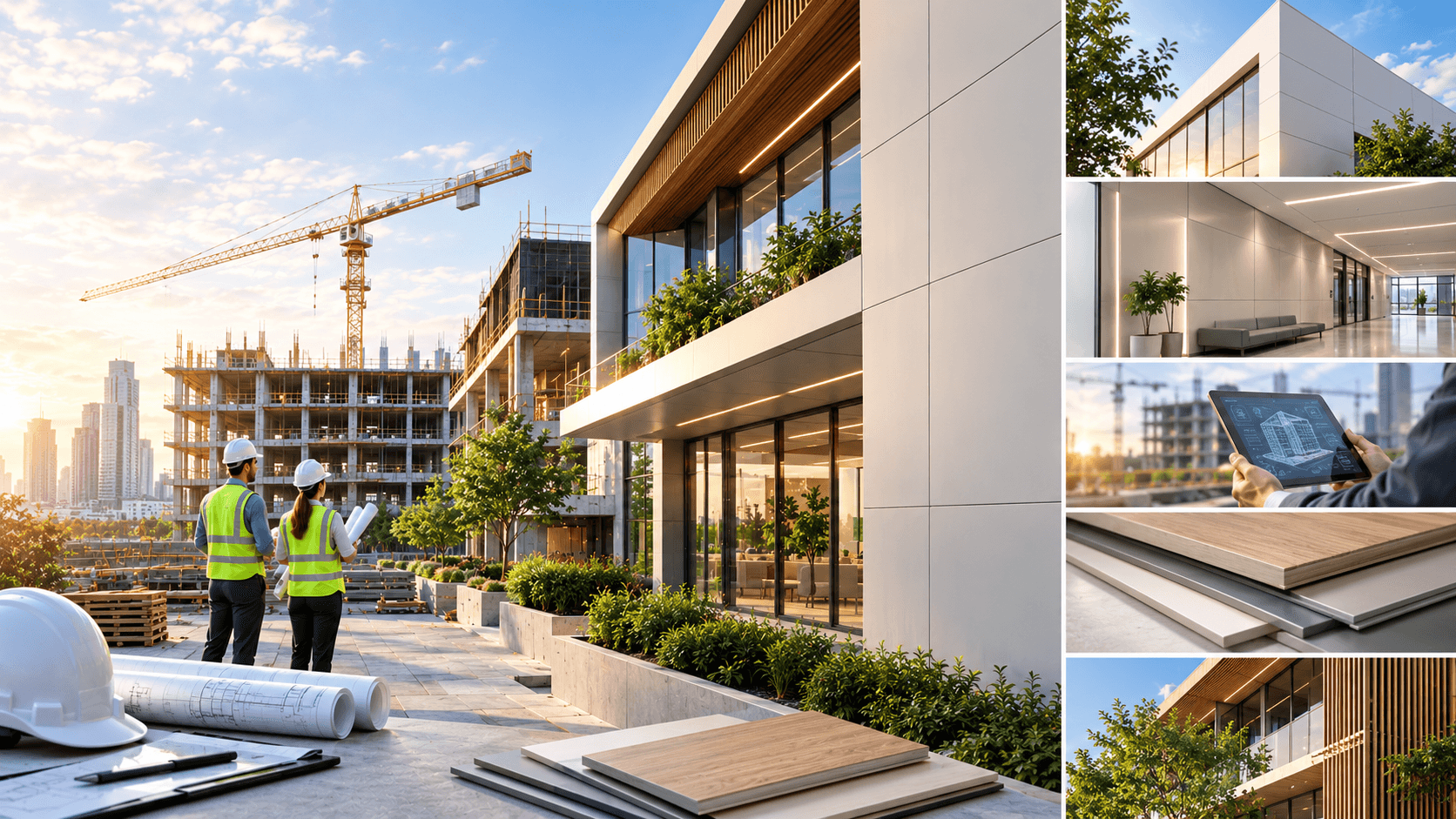
Modern construction is gradually changing its priorities. If earlier the main attention was paid to the cost of construction of the object, its appearance and the speed of work, today this is no longer enough. The costs throughout the entire period of operation, energy efficiency, fire safety, maintainability of structures and the ability to adapt the building to new needs are becoming important.
These changes affect more than just architecture. They determine what materials are used for walls, floors, and ceilings, how installations are organized, and how easy it will be to update a space in a few years.
These trends are especially noticeable in public construction. Hospitals, schools, offices, shopping malls and administrative buildings must remain functional even during renovation. Therefore, modern design solutions are increasingly evaluated not only by the initial price, but also by the convenience of further operation.
1. From construction cost to life cycle cost
One of the main trends in modern construction is the transition from estimating initial costs to comprehensive calculation of the life cycle cost of a building.
The initial price of the material does not always reflect the actual costs. Cheaper finishes may require frequent painting, spot repairs or complete replacement due to damage. Added to this are the costs of personnel, site organization and temporary restrictions on the use of the premises.
Therefore, when choosing materials, it is worth considering:
purchase and delivery costs;
costs of preparing the base;
complexity of installation;
duration of repair work;
the need for regular maintenance;
possibility of local recovery;
dismantling and replacement costs;
the impact of the renovation on the operation of the building.
This approach is especially important for hospitals, educational institutions, and other facilities with a constant flow of people.
A material that costs a little more at the time of purchase may be more cost-effective in the long run. But this needs to be backed up by calculations, not just advertising promises.
2. Quick installation and dry technology
Construction technologies are evolving towards reducing the number of operations on site. One practical example is dry construction and the use of ready-made cladding systems.
Traditional wall decoration often involves successive plastering, puttying and painting works. Technological breaks may be required between individual stages for the materials to dry.
Dry installation systems allow you to organize some of the work without such a cycle. Depending on the design, boards, panels, mounting profiles and fasteners are used, which form the finished cladding plane.
The advantages of this approach may include:
reducing the number of wet processes;
reduction of dependence on the drying time of finishing materials;
possibility of pre-planning installation;
simplification of work organization in reconstructed buildings;
possibility of gradual renovation of premises.
However, dry installation does not mean a complete absence of dust or preparatory work. The need for dismantling, cutting, drilling and leveling depends on the condition of the object and the selected system.
For public buildings, something else is important: a significant part of technological operations can be made more predictable and controlled.
3. Modular systems instead of individual materials
Another important trend is a systematic approach to construction solutions.
Previously, materials were often selected separately: panels or slabs, fasteners, profiles, corner and junction elements. However, in practice, the quality of the finished structure depends on the compatibility of all components.
A modern system must take into account not only the main material, but also the mounting nodes, the geometry of the joints, the adjacency to the floor and ceiling, as well as access to communications, if provided for by the design.
This is especially important for wall cladding in corridors, offices, medical centers and educational institutions.
A comprehensive solution allows you to determine in advance the installation method, the number of components and the order of work. This reduces the risk of situations where you have to look for additional materials or change the design of joints already at the construction site.
In the GYPSUN® system, this principle is implemented through a combination of decorative wall panels, an installation subsystem and special profiles. Depending on the project, Omega-, Pi-, T-, L- and F-profiles, as well as aluminum skirting boards, can be used.
As a result, the decoration is viewed as a single structure, rather than as a set of unrelated products.
4. Fire safety as part of design
Fire safety has become one of the key criteria for choosing materials for modern buildings. This applies not only to load-bearing structures, but also to interior decoration, cladding and other interior elements.
During design, it is necessary to take into account the purpose of the room, the number of floors of the building, evacuation routes, type of structure, and established regulatory requirements.
It is important to distinguish between the characteristics of a single material and the finished structure. The indicators of the base, decorative coating and cladding as a whole cannot always be identified.
Therefore, documents confirming the characteristics of a specific product, as well as the compliance of the solution with the project requirements, are important for the designer and the customer.
In modern construction, it is increasingly important not to simply declare the fire safety of a material, but to have documentary confirmation of its characteristics.
5. Energy efficiency and rational use of resources
Energy efficiency remains one of the key areas of development in the construction industry. It encompasses thermal insulation, building envelope tightness, ventilation, heating, cooling and engineering systems control.
At the same time, energy efficiency is not limited to the choice of insulation or the installation of modern equipment.
The durability of materials, the maintainability of structures, and the ability to update individual elements without large-scale dismantling are also important.
Rational use of resources involves reducing waste, precise planning of purchases, and selection of materials according to real operating conditions.
For finishing systems, this means the need to evaluate not only the appearance, but also the installation technology, service life, and repairability.
6. Durability and maintainability of the finish
Any room needs updating over time. Surfaces develop scratches, signs of use, and local damage. In public buildings, this process is more intense due to the constant movement of people and equipment.
Therefore, one of the trends in modern construction is designing finishes taking into account future renovations.
It is important to understand in advance whether it is possible to restore a separate section or whether the entire wall will have to be redone. The availability of components, the design of joints and the method of fastening the material are important.
Panel systems can be convenient in cases where the design allows for local repairs. However, the possibility of replacing an individual panel depends on the specific installation scheme and the execution of joints.
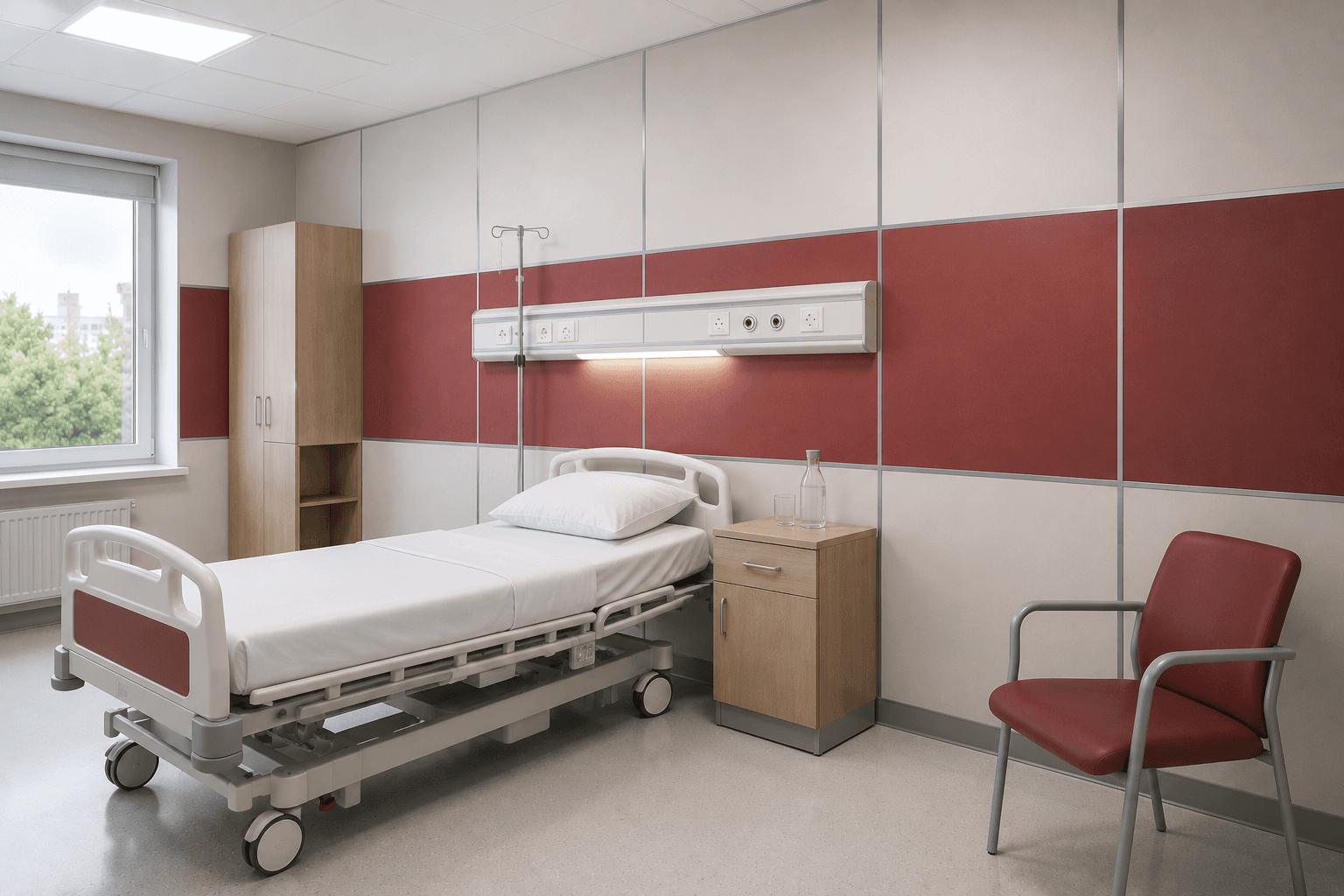
This approach is especially relevant for hospitals, schools, office centers and retail spaces, where regular interior renovation is part of the operation.
7. Public buildings require specialized solutions
Materials that work well in residential spaces do not always meet the needs of public facilities.
In hospitals, requirements for surface cleaning, fire safety and functional purpose of premises are important. In schools and childcare facilities, it is necessary to take into account the intensity of use and possible mechanical loads. In offices, speed of repair, appearance and the possibility of redevelopment are important.
Therefore, there is no universal solution for all buildings.
The material must be selected in accordance with operating conditions, technical characteristics and regulatory requirements.
For example, for corridors with constant movement of trolleys and furniture, it is advisable to provide appropriate protective elements. For medical premises, it is necessary to check the compatibility of the coating with the intended cleaning agents. For escape routes, the established fire safety requirements are particularly important.
It is a comprehensive approach that allows you to avoid mistakes when choosing a finish.
8. Minimalist design and functionality
Architectural trends in recent years demonstrate a sustained interest in simple shapes, subdued colors, and materials with expressive textures.
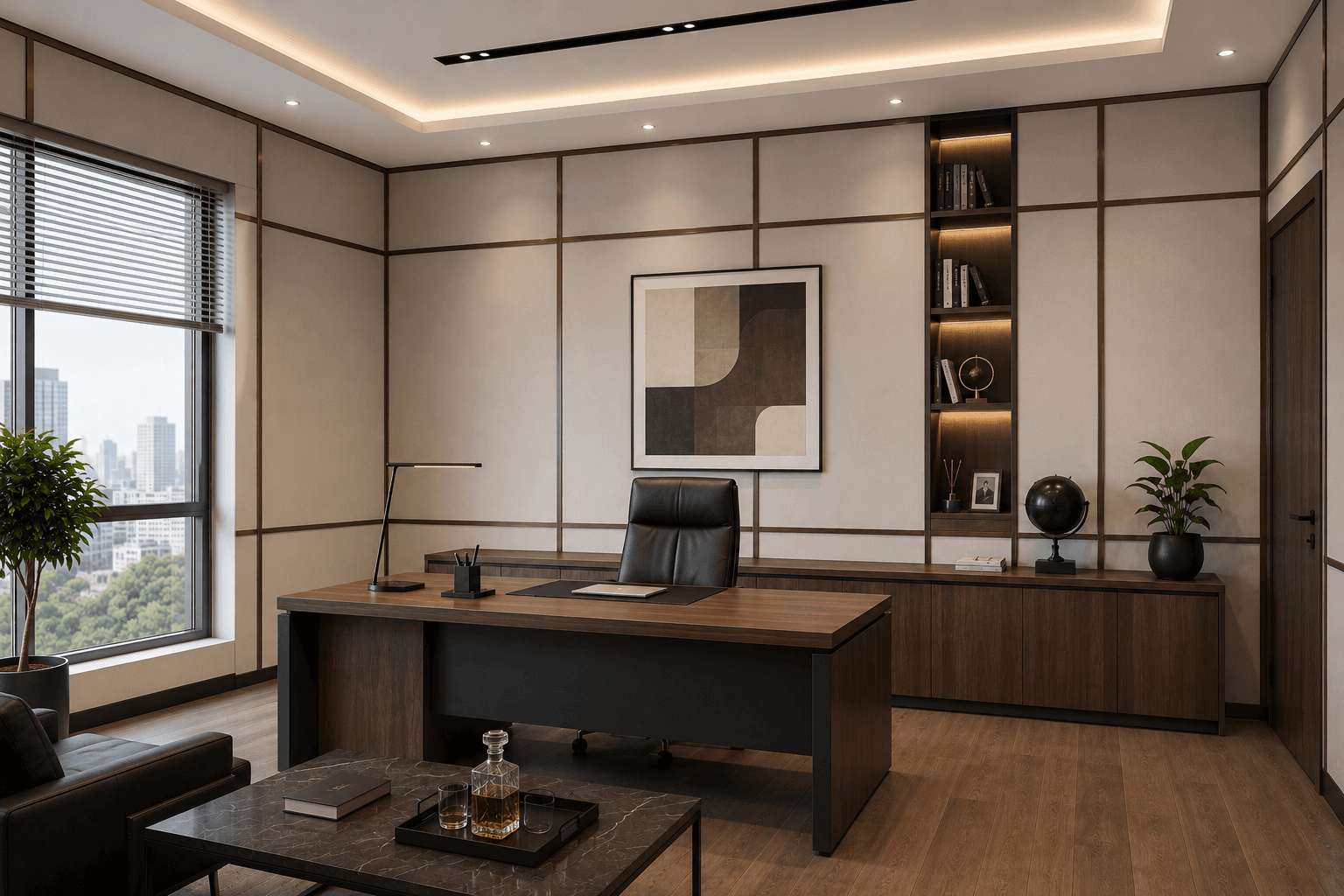
In public interiors, this is manifested in the use of monochromatic surfaces, wood textures, clear geometry, and thoughtful joints.
Minimalism does not mean the absence of technical details. On the contrary, it requires careful execution of angles, adjacencies and connections between materials.
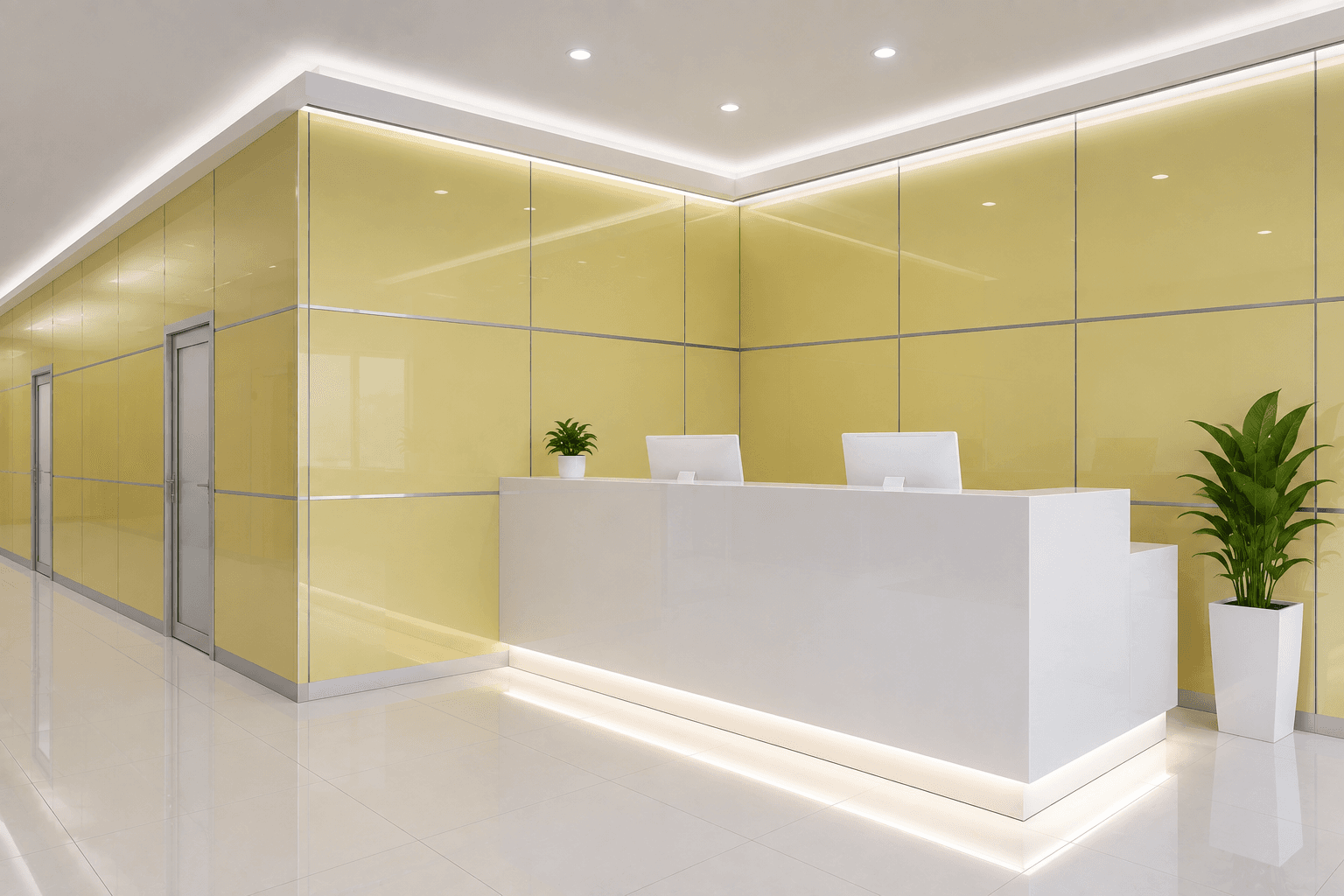
Decorative profiles can perform not only a technical function, but also shape the rhythm of the surface. They allow you to create regular wall geometry, combine different colors and emphasize the architectural structure of the room.
The GYPSUN® system provides decorative profiles for this purpose, which can be powder-coated in various colors. This allows them to be matched to the panels or used as a contrasting element of the interior.
9. Reconstruction instead of complete replacement of the building
In many cases, renovating an existing building is a practical alternative to new construction. This is especially true for public facilities that already have the necessary infrastructure but need to be modernized.
Reconstruction may include replacing engineering systems, updating finishes, changing the functional purpose of premises, and improving operating conditions.
One of the most difficult tasks is organizing work without completely stopping the facility's operations.
In such conditions, technologies that allow for repairs to be carried out in separate sections and reduce the number of consecutive finishing operations may be advantageous.
Panel cladding can be one such solution. It allows you to organize a new wall plane on the mounting subsystem, if the condition of the base and design conditions allow it.
However, before starting work, it is necessary to check the foundation, fasteners, communications, and the possibility of using the selected design.
10. Digital design and assembly accuracy
Digital tools are increasingly being used for project development, coordination of engineering systems, material calculation, and work performance monitoring.
For the customer, this means the ability to plan the budget more accurately and reduce the number of changes during construction.
For manufacturers of building materials, digitalization opens up opportunities for creating catalogs, technical specifications, installation instructions, and product configurators.
This approach is especially useful for systems that consist of several compatible components.
If the designer can determine the panel type, profiles, angles, and other components in advance, this simplifies the preparation of specifications and procurement planning.
As a result, digital tools help not only create visualizations, but also improve the organization of real construction processes.
11. How the choice of finishing materials is changing
The modern market offers a wide selection of solutions: painting, ceramic tiles, decorative plasters, laminated boards, composite materials, and ready-made panel systems.
Each option has its advantages and limitations.
Painting allows you to get a solid surface, but damaged areas may require preparation and repainting. Tiles have their own installation and maintenance of joints. Panel systems can reduce some of the finishing operations, but require the right choice of base, fasteners and joint design.
Therefore, comparing materials only by the price per square meter is incorrect.
For an objective decision, it is necessary to take into account the cost of the finished structure, the complexity of the installation, the timing of the work, maintenance requirements, and expected repair costs.
It is this approach that helps to choose a technology that meets not only the construction budget, but also the objectives of further operation.
12. GYPSUN® in the context of modern construction
Modern construction trends are creating demand for solutions that combine installation logic, functionality, and thoughtful maintenance.
GYPSUN® meets this approach with a system of decorative wall panels, an installation subsystem and profiles for joints, corners and adjacencies.
Depending on the specific design, different slab bases and decorative coatings are used. This allows you to select materials according to the project conditions, rather than being limited to one universal option.
For public and medical buildings, it is especially important that the solution can be considered as a complex: from the choice of panel to the method of joint design and installation organization.
However, specific characteristics, including fire performance and maintenance requirements, should be checked against the relevant product documentation.
GYPSUN® is an example of how a modern approach to decoration moves from selecting a single material to designing a finished system.
Conclusion: the future of construction lies in integrated solutions
Modern construction is evolving towards increasing efficiency at all stages of a building's life cycle.
Energy efficiency, fire safety, quick installation, maintainability, digital design, and rational use of materials are becoming important criteria for choosing technologies.
For public buildings, the ability to carry out repairs without unnecessary technological operations and long-term restrictions on the operation of the premises is of particular importance.
That is why more and more attention is being paid to ready-made systems in which the material, fasteners, joints and installation components are developed as a single solution.
GYPSUN® is a modern approach to wall cladding, in which decorative panels, an installation subsystem and profiles are combined into one system for the construction, reconstruction and further operation of buildings.