Interior 2027: Why Wall Panels Are Replacing Paint, Tile, and Wallpaper
Wall panels are becoming an important interior trend in 2027. We analyze why ready-made panel systems are gradually replacing traditional finishes and what they bring to modern architecture.
A few years ago, the choice of wall decoration seemed almost unchanged. Paint - for most rooms. Tile - for areas with moisture and increased load. Wallpaper - when you need to quickly change the color, texture or atmosphere of a room.
In 2027, the logic of choice gradually changes.
What comes to the fore is not just a decorative material, but a ready-made finishing system that simultaneously solves several tasks: design, speed of installation, maintainability, wear resistance, care and stability of appearance.
That is why wall panels are increasingly used in modern interiors. They have long ceased to be a solution exclusively for offices or commercial premises. Today, panel systems are becoming part of the architecture of hospitals, clinics, educational institutions, administrative buildings, offices, retail spaces and private interiors.
At the same time, the very approach of designers to walls is changing. In modern projects, not only color and pattern are important. What matters is texture, geometry, rhythm of joints, the possibility of zoning and the ability of the material to remain practical in daily use. Modern reviews of interior trends also show a growing interest in decorative wall panels, expressive textures and personalized solutions.
Why the approach to wall decoration is changing
Classic repair involves a sequence of operations.
Prepare the base.
Level the wall.
Plaster.
To putty.
Polish.
Prime.
Paint.
When it comes to wallpaper, other operations are added: preparing the base, applying glue, cutting the canvases, and joining the pattern.
Tiles also require a significant amount of preparation work. The base must meet the requirements of the cladding, you need to perform a layout, prepare the adhesive base, lay and grout the joints.
Each of these materials has its own advantages. But in all cases, the final result depends not only on the material itself, but also on the quality of the base and the work of the craftsmen.
The panel system works according to a different logic.
The wall does not necessarily have to be perfectly prepared for the finish. The panels are mounted on a structure that forms the plane and geometry of the cladding.
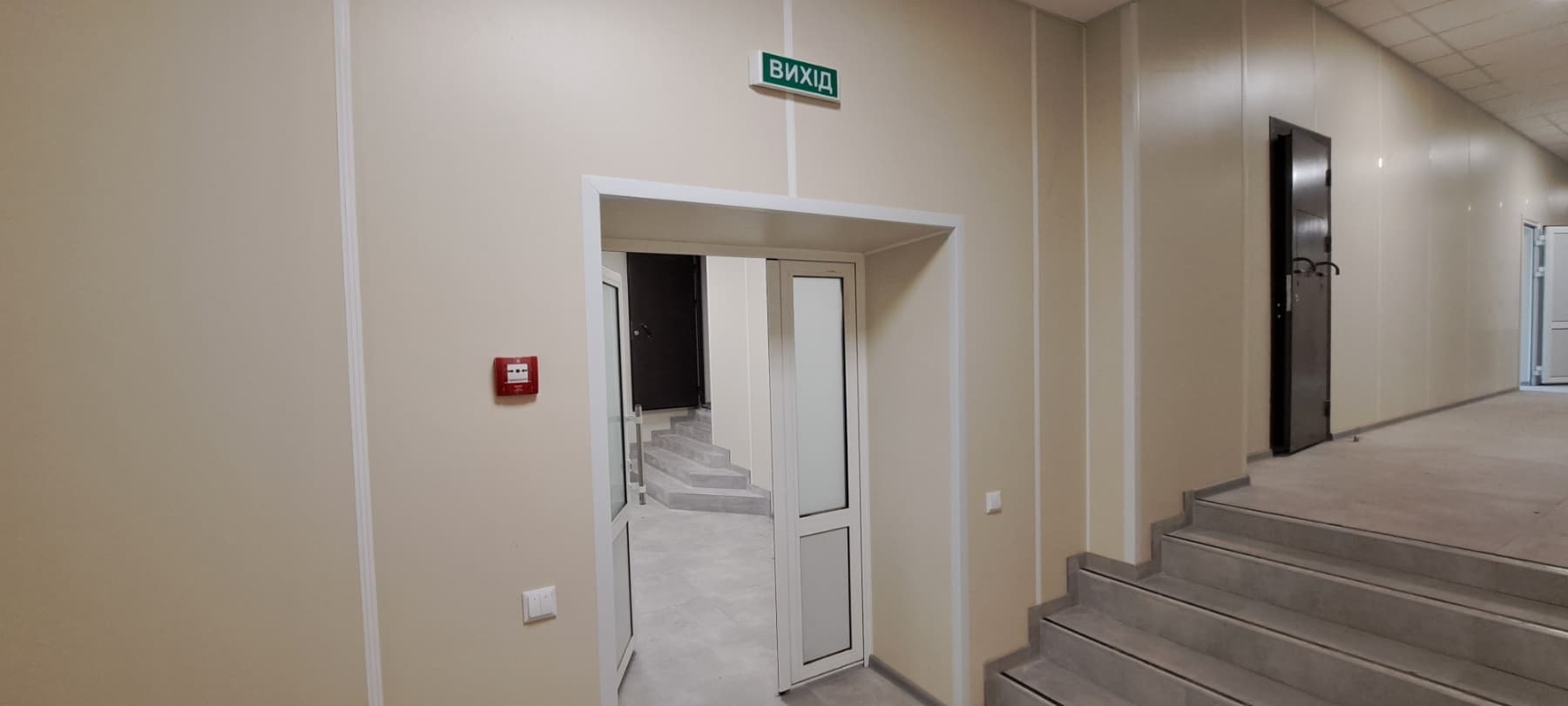
For GYPSUN®, this is one of the key principles of the system: the panels are mounted in a frame way, and the profile system helps to form a flat plane and neat joints. Dry installation allows you to avoid a significant part of the wet processes characteristic of traditional finishing.
Wall panels instead of paint: it's not just about color
Paint remains one of the most common ways to decorate. But a painted wall is primarily a finishing coating on a prepared base.
It is the preparation that often takes up a significant part of the repair.
You need to get a flat surface without cracks, waves, sinks and other defects. Then apply a primer and several layers of paint. After the work is completed, the surface looks simple, but behind this simplicity lies a rather long technological process.
Wall panels change this sequence.
The decorative surface is already formed at the factory. After installation, there is no need to perform a full cycle of puttying, sanding and painting the entire wall.
This is especially important where repairs need to be done quickly.
For example, in an office, it is not always possible to stop work for several weeks. In a clinic, it is necessary to close the premises for a long period. In a school, it is necessary to wait for the completion of long wet processes.
That is why ready-made panel systems are becoming interesting not only to designers, but also to building owners and maintenance services.
Panels or wallpaper: what is changing in modern interiors
Wallpaper offers a huge number of decorative possibilities. They can imitate textiles, stone, wood, create graphic compositions or form an accent wall.
But wallpaper remains a material that works directly with the wall surface.
An uneven base may become apparent after installation. Mechanical damage often means local repair or replacement of part of the canvas. In places with high intensity of use, the surface gradually loses its original appearance.
The panels give a different model.
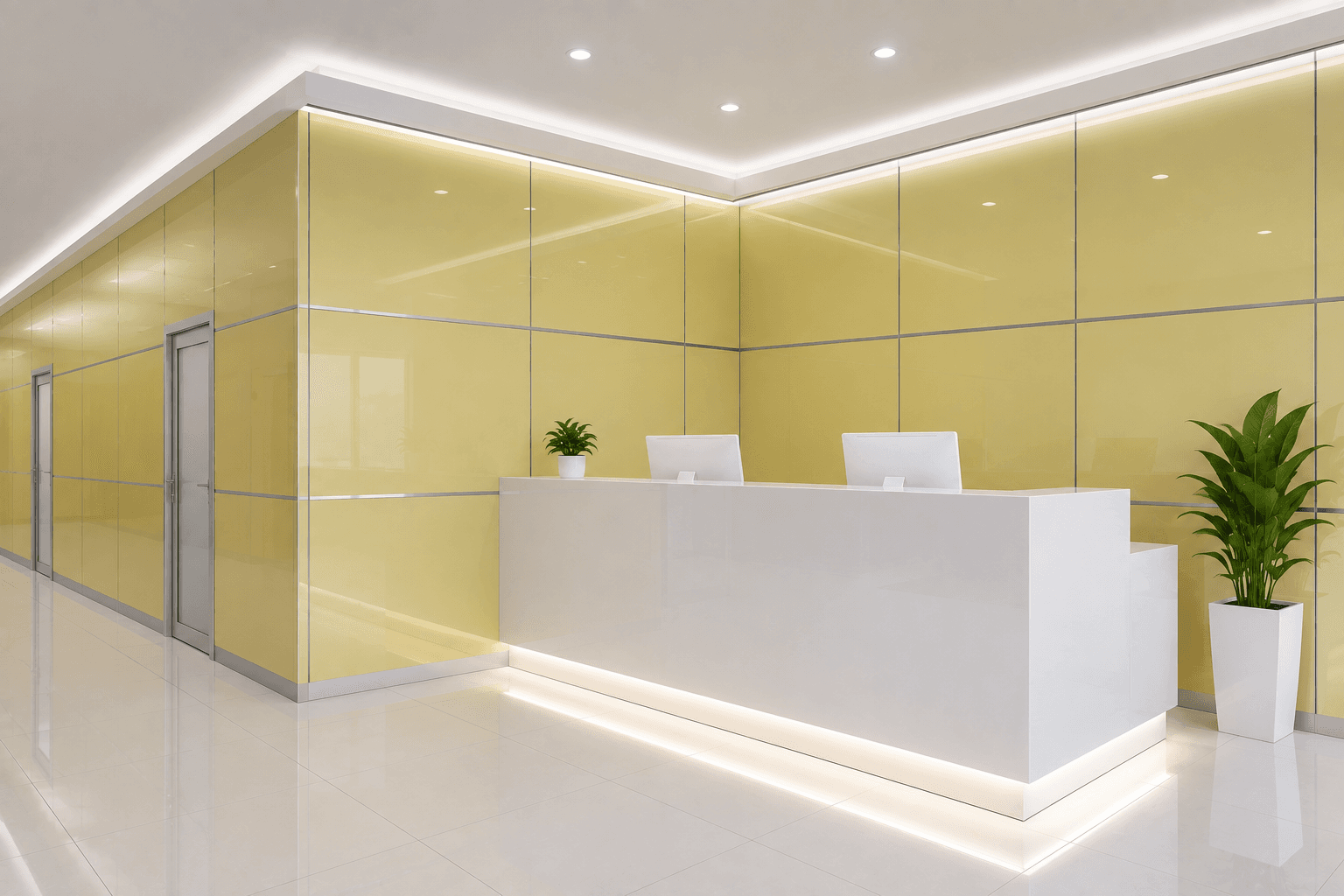
They create an independent decorative surface. The joint between the elements can be turned into part of the design. The profile does not have to be hidden - it can be made a visible graphic element of the interior.
That is why a modern panel system is no longer just a "big letter on the wall."
It is a composition of panel, joint, profile, angle and overall geometry.
Why tiles are inferior to panels in some modern scenarios
The tile will not disappear anywhere.
In bathrooms, sanitary areas, process rooms and other places, it remains an important material.
But where the main task is to create a large decorative surface, tiles have obvious features.
You need to make a layout.
Take into account the seams.
Prepare the base.
Perform styling.
After that, the question remains of operating the seams and cleaning them.
The panel system allows you to create a different aesthetic - large, flat surfaces with controlled joint geometry.
This is important for a modern minimalist interior.
The fewer random lines on the wall, the calmer the space feels.
And if joints are still necessary, they become part of the composition.
2027: Interiors become more technological
One of the major changes in modern design is the blurring of the line between the decorative and the technical.
Previously, engineering solutions were tried to be hidden as much as possible.
Today they can become part of the design.
Profiles, metal elements, linear joints, panel rhythms and integrated lighting are used as architectural tools.
This is clearly visible in modern design objects: decorative wall panels and expressive structural elements are increasingly used to create the character of a space.
In the GYPSUN® system, the profile also performs more than just a technical function.
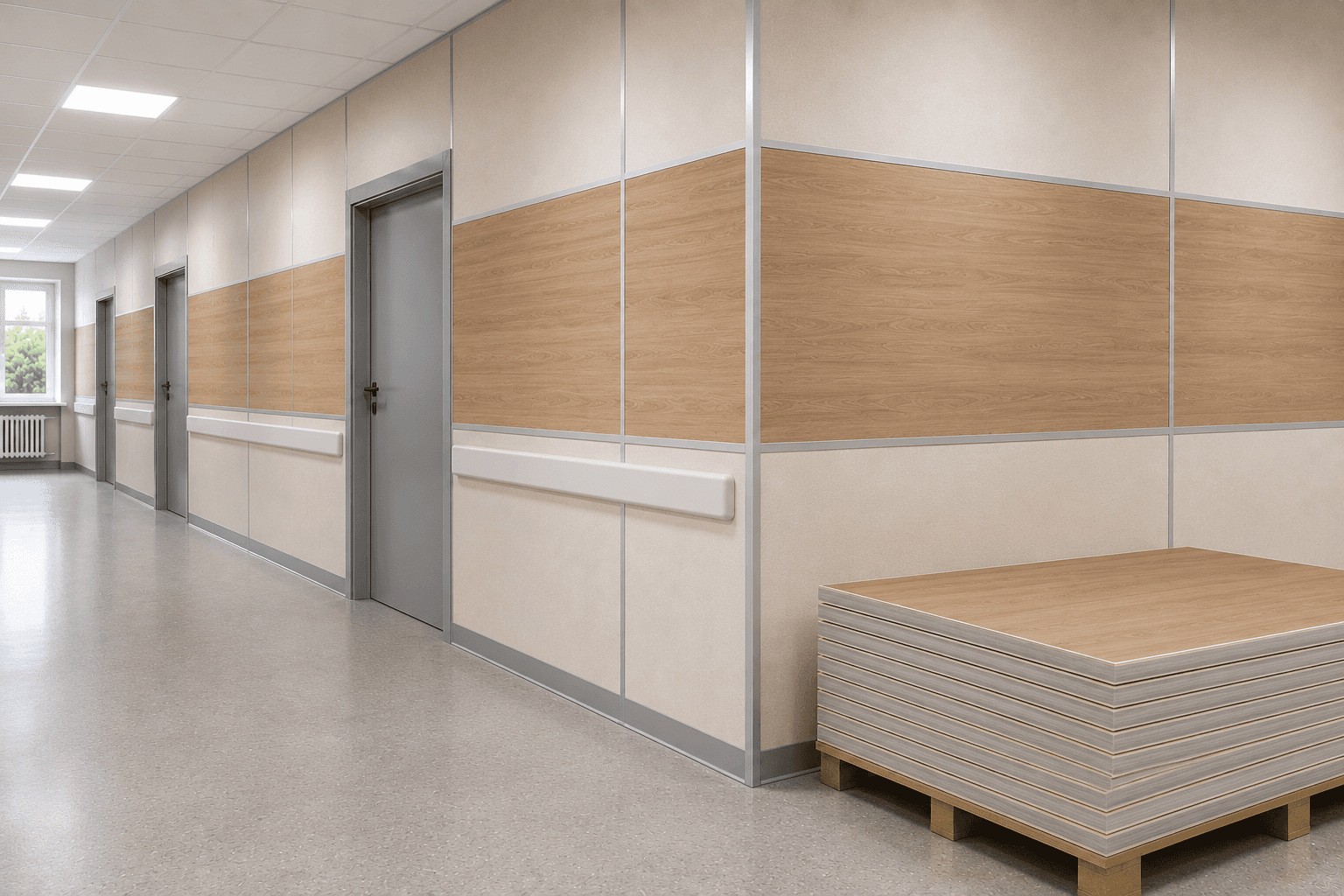
The omega profile forms the basis for joining the panels. Decorative profiles cover the assembly nodes and create a clear line between the elements. L- and F-profiles are used to decorate internal and external corners.
As a result, the structure becomes part of the architecture.
The main advantage of panels is not their appearance
The design can be changed.
The color can be changed.
The invoice can be changed.
But the logic of operating the building remains.
That is why in 2027, the issues surrounding finishing materials are becoming broader.
How to quickly install the system?
How does it behave under intensive use?
How easy is it to maintain the surface?
Can I replace a single element?
Does the material meet the requirements of a specific room?
Are wet processes necessary?
And, especially for public buildings, what fire safety characteristics does the finished material have?
This is where panel systems gain an important advantage: they can combine a decorative surface with the technical characteristics of the base.
For example, the GYPSUN® line includes panels of classes NG and G1 . For a specific room, the choice of material should be made taking into account design and regulatory requirements.
Why is this especially important for public buildings?
In a private apartment, renovations are often evaluated based on three criteria: appearance, price, and convenience.
There are many more criteria in a public building.
There is an intensity of human movement.
There are cleaning requirements.
There are mechanical loads.
There are fire safety requirements.
There is a need for urgent repairs.
There are issues regarding the operation of the premises during reconstruction.
That is why panel systems are especially interesting for hospitals, clinics, schools, office centers, commercial and administrative buildings.
GYPSUN® positions its NG and G1 panels specifically for facilities where increased safety and operational requirements are imposed on the finish.
Interior 2027 is not a rejection of traditional materials
It would be wrong to say that paint, tiles or wallpaper will completely lose their relevance.
This will not happen.
Each material has its own scope of application.
Paint remains indispensable where a simple, solid surface and minimal finish thickness are required.
Wallpaper offers a wide selection of decorative themes and textures.
Tiles are necessary in many areas with high humidity and specific surface requirements.
But panels occupy a different niche.
They combine design and readiness for installation .
This is the main reason for their growth.
Wall panels as a quick repair tool
Modern renovation is increasingly being evaluated not only by the quality of the final result.
Time is also important.
The building must continue to operate.
Office - to receive employees.
Clinic - patients.
Shop - customers.
Educational institution - students.
Therefore, reducing the number of technological operations becomes an economic factor.
Panel assembly allows you to transfer a significant part of the processes from the construction site to production. The panel surface is formed in advance, and the system remains to be installed on site.
GYPSUN® directly emphasizes dry installation, the absence of traditional wet processes, and the ability to reduce the time required for finishing work.
Trend for natural textures and calm surfaces
Another trend that will be noticeable in interiors in 2027 is the desire for materiality.
Not just color.
And the texture.
Not imitation for imitation's sake, but a surface that creates the feel of the material.
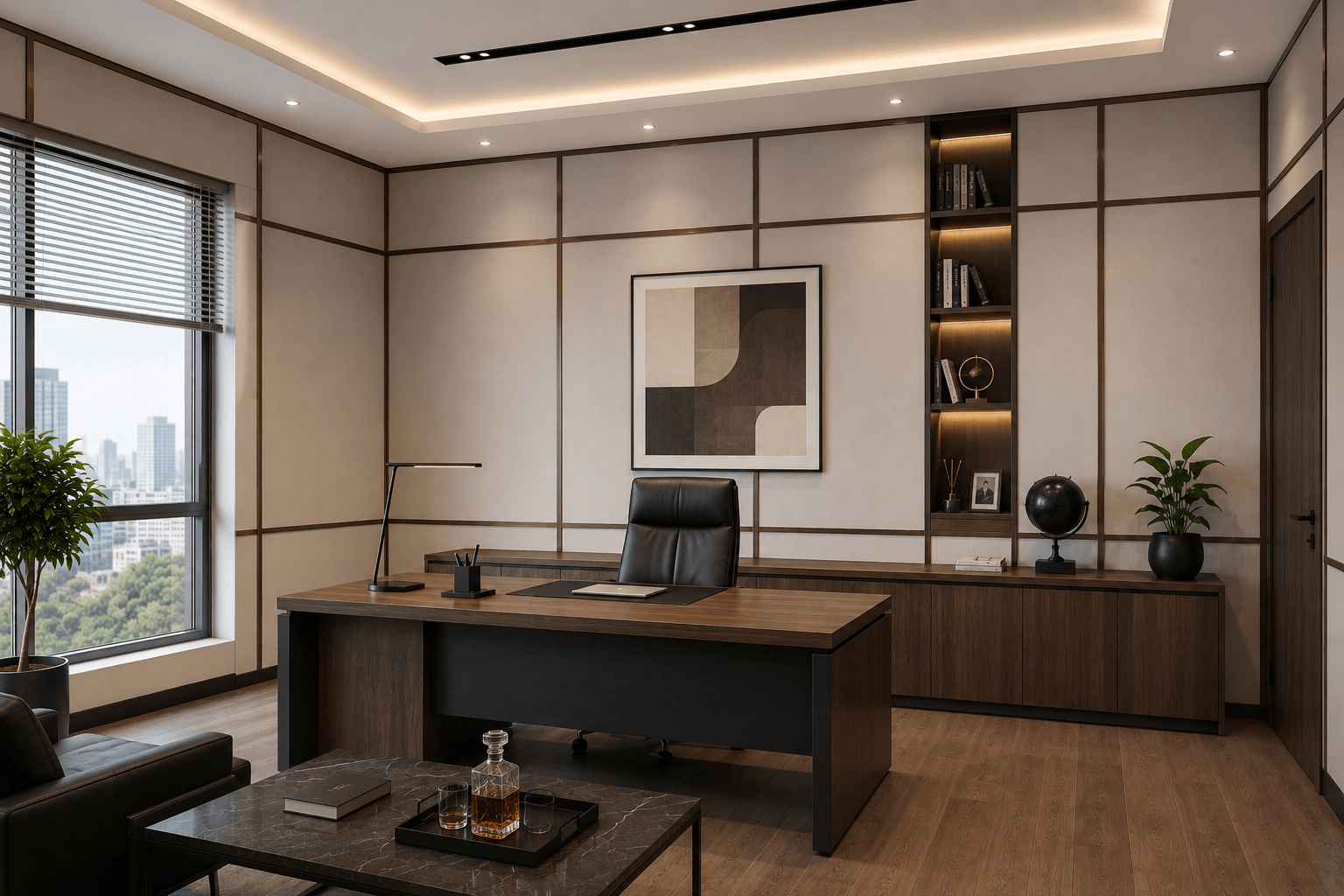
Modern interiors are actively using warm shades, wood textures, natural colors, expressive surfaces and combinations of different materials. Current design trend forecasts for 2026–2027 also demonstrate interest in warm natural palettes and more personalized space design.
This opens up wide possibilities for wall panels.
One plane can be monochromatic.
The other one has a wood texture.
Joints can be made contrasting or as invisible as possible.
Profiles can support the overall color concept of the interior.
As a result, the same mounting system can look completely different.
The future is in systems, not individual materials
The most important change isn't even that panels are becoming more popular.
The very concept of decoration is changing.
Previously, the customer bought paint.
Or tile.
Or wallpaper.
Today, he is increasingly looking for a ready-made solution.
Material.
Construction.
Profile.
Fastening.
Decorative elements.
Installation technology.
And technical documentation.
That is why manufacturers who develop not just a panel, but a complete system, have the opportunity to control a much larger part of the final result.
GYPSUN® works on this principle: the panels are combined with a proprietary profile system, which allows for the formation of a single structure and controlled joint geometry.
What to expect from the interior of 2027
The interior of 2027 is unlikely to be defined by a single style.
Rather the opposite.
It will become more individual.
But at the same time, it is more technological.
Designers will work not only with color and furniture. The focus will remain on surfaces, textures, acoustics, lighting, geometry, and ease of use.
That is why wall panels have good prospects for further spread.
Not because paint, wallpaper, or tile have become "bad."
And because the requirements for modern repairs have become broader.
A beautiful wall is no longer enough for the customer.
He wants a quick installation.
Clean process.
Stable result.
Possibility of repair.
Relevant technical specifications.
And a design that doesn't need to be changed in a few years.
Conclusion
Wall panels are becoming one of the key interior tools of 2027 , because they answer several requests of modern construction at once.
They allow you to create large decorative surfaces. Reduce the number of wet processes. Simplify installation. Give more freedom in working with texture and color. And when using a complex profile system, they allow you to turn joints and structural elements into part of the design.
Paint, wallpaper, and tiles will continue to be used.
But alongside them, a new category of decoration is emerging - panel systems , in which decorative material, construction, and installation technology work together.
This is precisely one of the main interior trends of 2027: the wall ceases to be just a surface. It becomes a ready-made architectural system.