Wall Panels 2027: 7 Top Trends in Design, Safety and Technology
What will wall panels look like in 2027? We look at 7 key trends: functional design, tactile textures, fire safety, acoustics, integrated lighting, rapid modular installation and material lifecycle.
Wall panels in 2027 are no longer just a way to quickly cover a wall surface. Modern panel systems are gradually turning into a comprehensive solution that simultaneously affects interior design, acoustics, fire safety, speed of repair, operation and the possibility of further modernization of the premises.
A few years ago, the choice of wall panels often came down to a question of color, texture and price. Today, this is not enough. For public, medical, educational, administrative and commercial facilities, material characteristics, installation technology, surface cleaning ability, maintainability and compliance with design requirements are becoming important.
For 2027, seven trends can be identified that will shape the development of wall panels and panel systems.
1. Functional design instead of mere decoration
The main trend is that the wall ceases to be just a background for the interior.
A modern wall panel can perform several functions at once: form the composition of a room, hide unevenness of the base, create acoustic comfort, ensure quick surface renewal, and integrate with other interior elements.
Modern architecture increasingly uses the principle of one structural element performing multiple tasks. The trend towards modularity and integration of functions is already actively manifesting itself in architecture and design.
Therefore, in 2027, the question that will be of increasing importance is not:
"What kind of panel is this?"
and the question:
"What does it give to the object?"
For example, a panel system can simultaneously provide decorative finish, organized wall geometry, and quick access to individual surface areas.
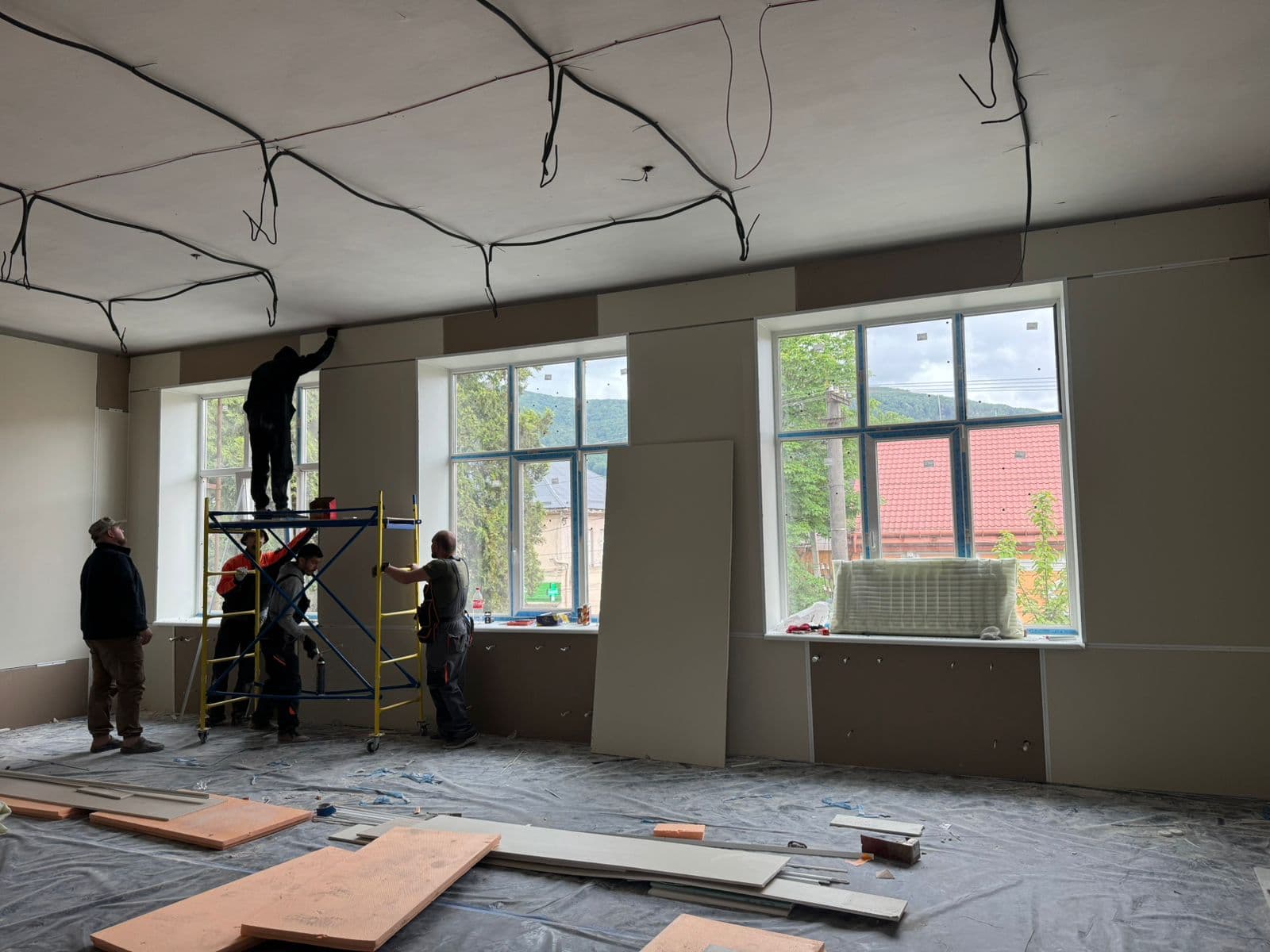
This is especially important for renovations. If repairs need to be done quickly, traditional plastering, puttying, painting, and long drying times can increase the time required for the work.
Panel assembly allows you to transfer a significant part of the preparatory processes from the construction site to production.
That is why wall panels are increasingly being considered as a system , rather than as a separate finishing material.
2. Subtle and tactile textures instead of excessive decor
The second trend of 2027 is a more restrained but expressive surface.
In interiors, there is a growing interest in materials that can be not only seen but also felt through texture. Current design trends for 2026 already demonstrate a shift towards natural, tactile and materially expressive surfaces.
For wall panels, this means the development of:
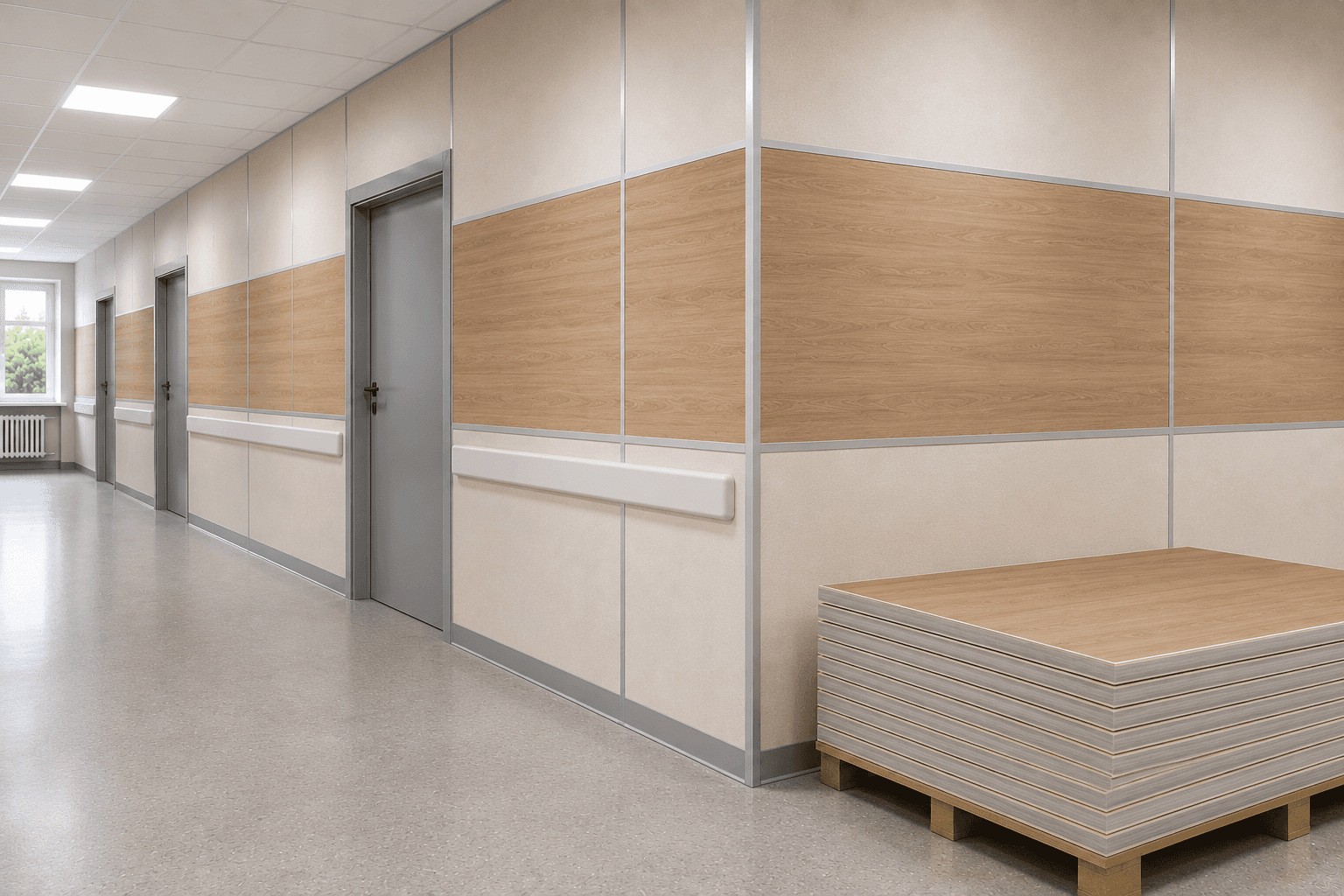
wood textures;
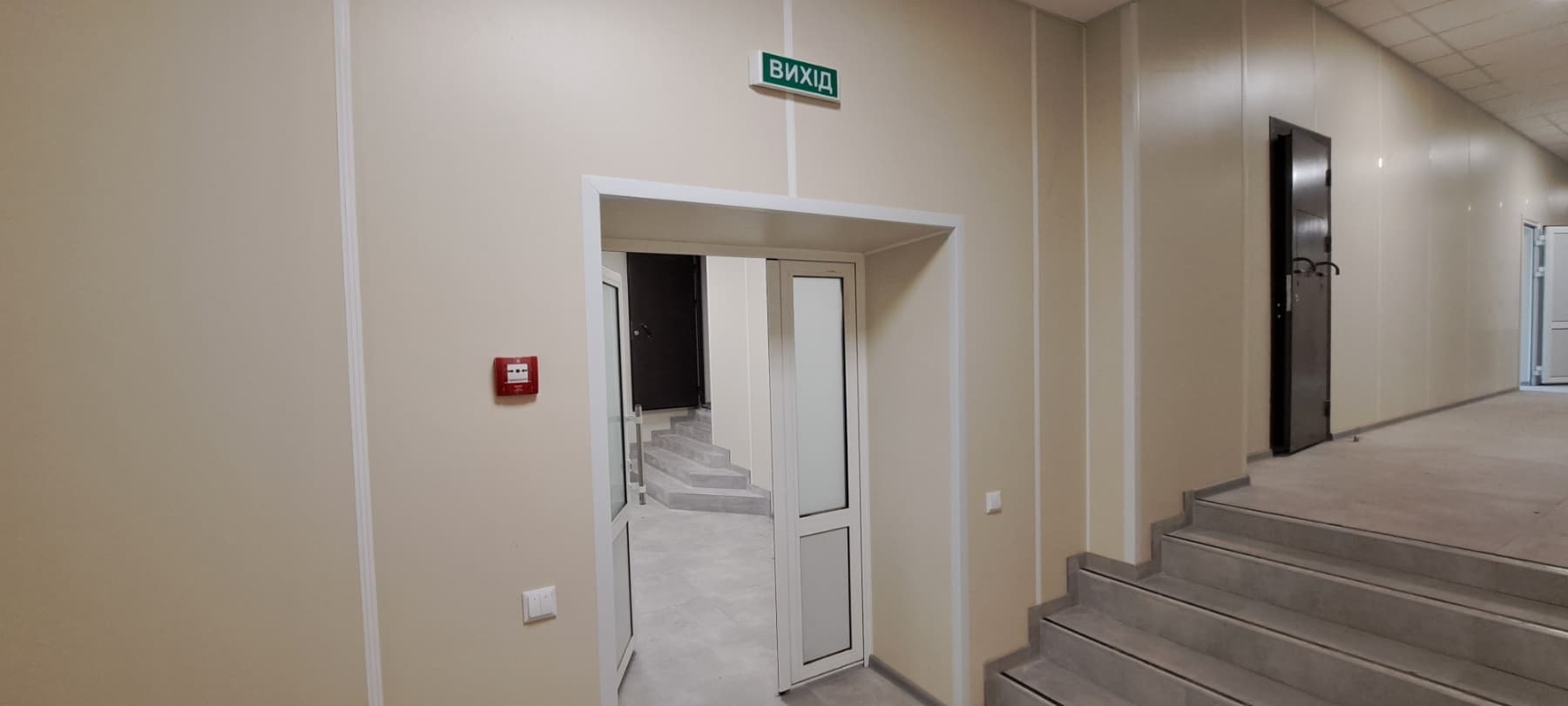
plain matte surfaces;
delicate relief;
vertical and horizontal geometry;
discreet decorative textures;
combination of smooth and textured surfaces.
At the same time, the need to make each wall an accent wall is gradually disappearing.
In a modern interior, a single textured surface can work alongside large, calm surfaces. This creates a cohesive environment rather than a collection of discrete decorative elements.
For GYPSUN® panels, this approach allows the use of monochromatic and wood-like decorative solutions without overloading the interior.
The quality of the joints is also of particular importance.
If the panel system is used over a large area, the joints become part of the architectural composition. The decorative profile in this case does not need to be hidden. On the contrary, it can form the rhythm of the surface and emphasize the modularity of the system.
3. Fire safety will be part of the design choices
The third trend is a change in the approach to choosing materials.
For public and commercial buildings, decorativeness cannot be considered separately from fire safety. The material must be selected according to the purpose of the room, the system design and the requirements of the project.
Therefore, in 2027, the concept of a "beautiful wall" will increasingly be supplemented by questions:
what is the panel made of;
what is its reaction to fire;
what characteristics does the base have;
what materials are used in the mounting system;
is there any necessary documentation?
whether the solution meets the requirements of a specific facility.
This is especially true for hospitals, schools, childcare facilities, administrative buildings, commercial and public spaces.
That is why it is important for manufacturers and customers to distinguish between the concepts of a decorative panel and a comprehensive panel system.
For example, GYPSUN® uses substrates based on GKL, GVL and other sheet materials with different characteristics. For a specific project, the selection of the substrate and its implementation should be carried out taking into account the purpose of the premises and the requirements of regulatory documentation.
Fire safety in 2027 will not become a separate option, but one of the design criteria.
4. Acoustics will become an integral part of wall systems
The fourth direction is acoustic comfort.
Modern spaces have become more technological, but at the same time they have more hard surfaces: glass, concrete, porcelain stoneware, metal, large smooth walls.
As a result, there is a problem of sound reflection.
For offices, this means poorer speech intelligibility. For classrooms, it means more difficult information perception. For healthcare facilities, it means additional noise in corridors, wards, and waiting areas.
That is why acoustic panels and acoustic solutions are increasingly being considered in conjunction with wall design.
Modern modular acoustic systems are already used not only to improve acoustics, but also as an element of architectural composition.
In 2027, we can expect further convergence of decorative and acoustic systems.
This means that the wall can simultaneously:
to look like a decorative surface and work as part of the acoustic environment.
For the designer, this fundamentally changes the approach. You don’t need to first create a design and then look for a place for acoustic panels. The acoustic solution can be incorporated into the wall composition at the design stage.
5. Integrated lighting and engineering elements
The fifth trend is integration.
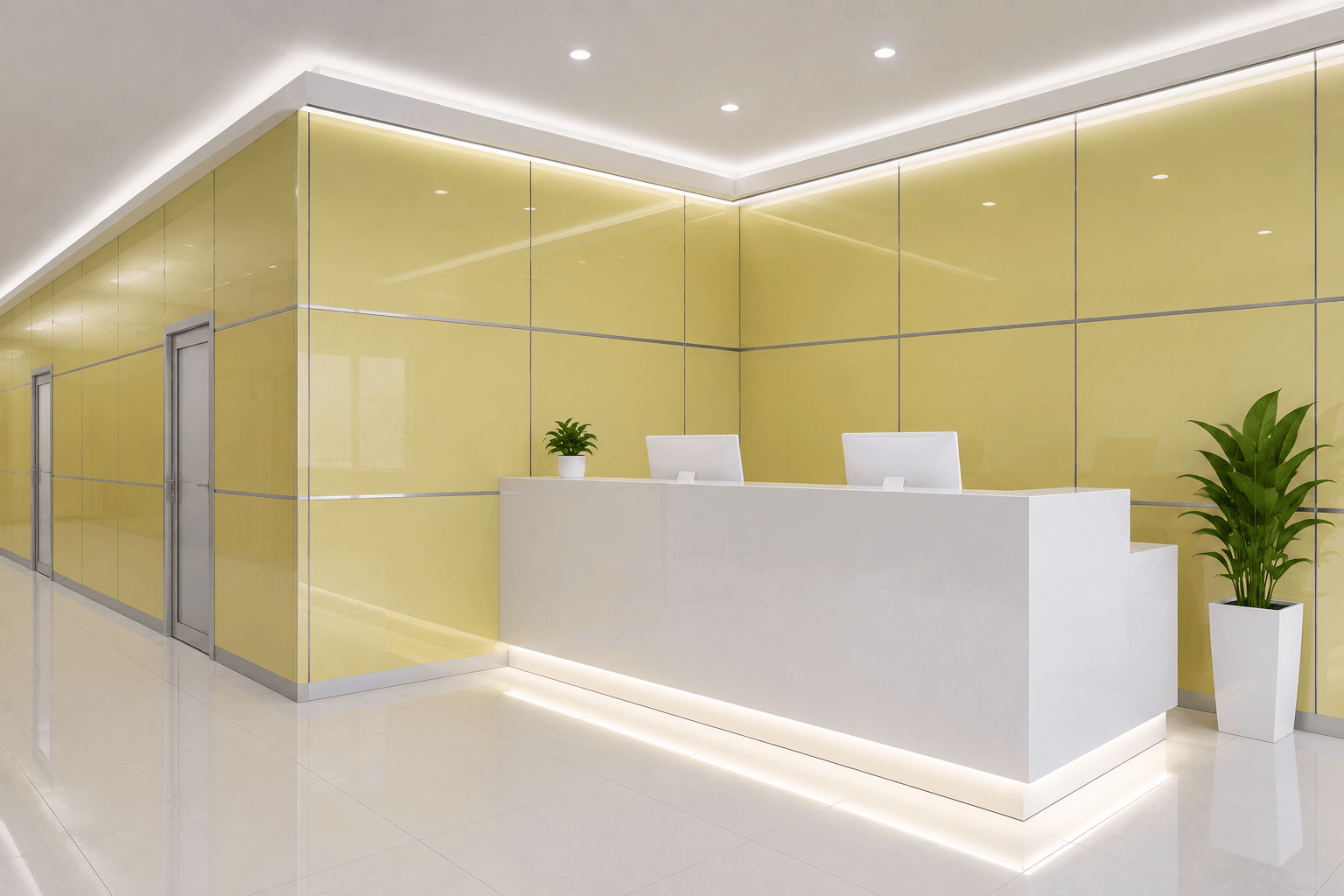
Lighting, navigation, cables, ventilation elements and other technical components are increasingly being made part of the overall architecture.
Current trends for 2026 already highlight integrated lighting and materials that can combine multiple functions among the development directions of modern architecture.
This opens up new possibilities for wall panels.
For example, in a panel system you can provide:
linear lighting;
decorative light inserts;
navigation;
audit elements;
hidden doors;
technological niches;
cable communications.
This is especially promising for medical institutions, business centers, hotels, and public spaces.
Instead of cutting holes and adapting the engineering to the finished surface after installing the panels, the system can be designed as a single solution.
This is another step from the concept of "wall decoration" to the concept of "architectural system" .
6. Modularity, quick installation and repair without stopping the facility
The sixth trend is directly related to building operation practices.
For many facilities, renovation is not just a construction process. It is also a time during which the premises cannot be fully used.
This is especially important for:
hospitals;
clinics;
pharmacies;
schools;
offices;
hotels;
commercial premises;
administrative buildings.
This is where the advantage of modular panel systems becomes most noticeable.
Modularity allows you to work in separate areas, replace individual elements, and plan repairs without completely dismantling the entire surface.
Research into modern modular architecture also links modularity to the ability to disassemble, modify, and reuse building components.
For businesses, this means less downtime.
For a medical institution, there is the opportunity to carry out repairs in stages.
For the school, it is an opportunity to renovate the premises without large-scale wet renovation.
For the owner of a commercial space, it is an opportunity to adapt the interior to a new tenant or a new functional scenario.
Therefore, the speed of installation in 2027 will be measured not only in the hours of work of installers.
An important indicator will be the time during which the room remains functional during renovation.
7. Lifecycle-friendly materials
The seventh trend is the transition from evaluating a material by the price per square meter to evaluating its life cycle.
The construction industry is increasingly focused on circularity, component reuse, waste reduction and assessing the impact of materials throughout their life cycle. The 2026 study also considers modularity, reuse and design for dismantling as important components of circular construction.
For wall panels, this can mean several things.
First, the durability of the surface is important.
Secondly, maintainability.
Third, the ability to replace individual panels instead of dismantling the entire wall.
Fourth, optimization of production and waste.
Fifth, the well-thought-out design of the mounting system.
That is why a panel system made of individual modules may have an advantage over a solution that is difficult to repair or dismantle without damaging neighboring elements.
What these trends mean for GYPSUN®
All seven directions actually lead to the same change.
Wall paneling ceases to be just cladding.
It becomes part of the room system.
For GYPSUN®, this means the development of not only the decorative panels themselves, but also the accompanying infrastructure:
mounting profiles;
decorative connecting profiles;
abutment systems;
non-standard solutions for corners;
aluminum skirting boards;
lighting integration solutions;
options for acoustic design;
panels with different base and coating characteristics.
The profile system plays a special role.
The joint between the panels should not look random. A thin decorative profile can simultaneously provide a structural connection and form a regular rhythm of the surface.
That is why vertical and horizontal joints in a modern interior can be part of the design.
Will wall panels replace traditional renovation?
Completely - no.
Each material has its own purpose.
But for facilities where speed, clean installation, geometry control, operation, and the possibility of local repair are important, panel systems are becoming an increasingly interesting alternative to traditional finishing.
Especially where repairs need to be carried out without a long downtime.
This is one of the reasons why panels are actively used in modern medical, educational, administrative and commercial spaces.
For healthcare facilities, the issue of surface handling is of particular importance. WHO considers a safe environment, materials and equipment as part of an infection control system, and recommendations for healthcare facilities specifically focus on cleaning and disinfection of surfaces.
Therefore, when choosing panels for hospitals, it is important to evaluate not only the appearance. The surface's ability to withstand regular cleaning, the design of joints, and the material's suitability for operating conditions are also important.
What will wall panels look like in 2027?
If you combine all seven trends, a fairly clear picture emerges.
The wall panel of the future is not just a decorative sheet on the wall.
This is a modular element that can simultaneously affect:
design + safety + acoustics + speed of installation + operation + manufacturability.
It is this change in approach that will define the market in the coming years.
The design will become more restrained and tactile.
Panels are more functional.
Installation is faster and more predictable.
Profiles are part of the architectural composition.
And the choice of material will increasingly depend not only on its price per square meter, but on how it will perform throughout the entire life cycle of the premises.
For architects and designers, this means more freedom in creating interiors.
For building owners, the opportunity to plan renovations as a managed process.
For manufacturers, there is a need to develop not a separate product, but a complete system.
And that is why 2027 may be the stage when wall panels will finally move from the category of "finishing materials" to the category of comprehensive architectural solutions.