
Технології
Comparison of panel substrates: GVL vs SML vs GKL
Detailed comparison of three main types of substrates for fire-resistant panels: characteristics, advantages and applications.
G
GYPSUN
Author
20 September 2024
8 min
GVLSMLGKLcomparisontechnical specifications
Choosing the right substrate for panels is a key decision that affects the longevity, safety and cost of your project. Let us examine in detail three main types.

GVL (gypsum fibreboard)
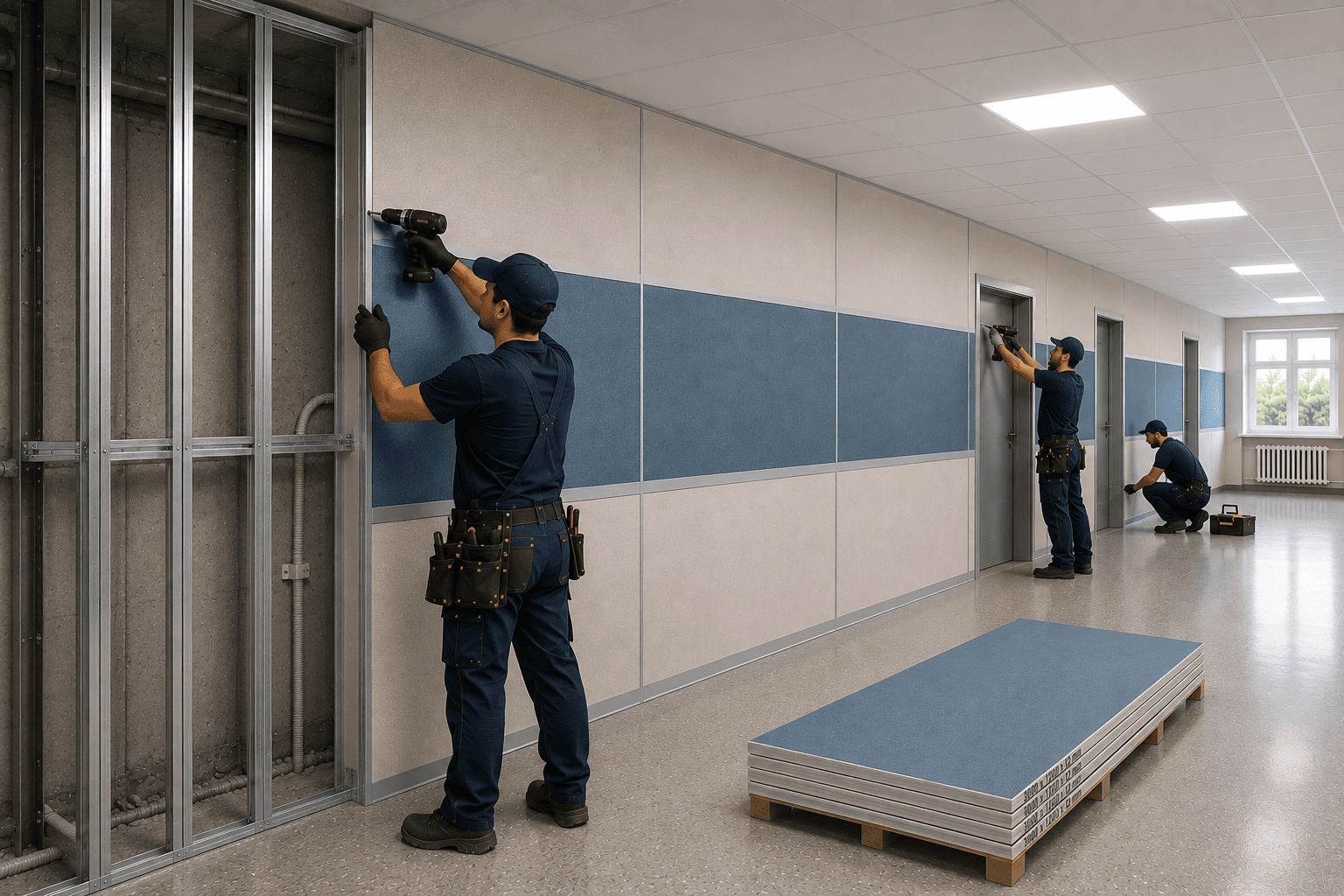
The most popular option for most applications. Made of gypsum reinforced with cellulose fibres, providing high strength and stability.
Advantages of GVL:
- Excellent sound insulation — up to 44 dB
- Affordable price — optimal value for money
- Wide choice of coatings — HPL, veneer, paint
- Easy to process — easy to cut and drill
- Eco-friendly — natural composition
Disadvantages of GVL:
- Medium moisture resistance — not suitable for pools
- Weight — heavier than GKL

SML (glass magnesium sheet)
Premium option with maximum moisture resistance and strength. Made from magnesium oxide and fibreglass.
Advantages of SML:
- Maximum moisture resistance — up to 98%
- High strength — impact resistant
- Frost resistance — can be used outdoors
- Resistance to fungi and mould
- Long service life — 25+ years
Disadvantages of SML:
- High price — 40% more expensive than GVL
- More difficult to process
GKL (gypsum plasterboard)
An economical option for technical spaces and budget projects. Classic gypsum between two layers of cardboard.
Advantages of GKL:
- Lowest price
- Light weight — easy installation
- Wide availability
Disadvantages of GKL:
- Low moisture resistance
- Lower strength
- Limited service life
Comparative table
| Parameter | GVL | SML | GKL |
|---|---|---|---|
| Moisture resistance | 85% | 98% | 60% |
| Sound insulation | 44 dB | 40 dB | 35 dB |
| Fire resistance | NG | NG | G1 |
| Price (relative) | 100% | 140% | 70% |
| Service life | 15 years | 25 years | 10 years |
Selection recommendations
- GVL: Offices, schools, hospitals, residential spaces
- SML: Pools, spas, façades, premium projects
- GKL: Technical spaces, temporary structures