Budget construction savings: where you can actually cut costs without sacrificing quality
Savings in budget construction are not about finding the cheapest material. It's about reducing the total cost of work, time, number of employees, and related expenses. Let's take a look at how GYPSUN™ frame panel systems are changing the economics of renovation.
Savings in budget construction do not start with the price of the material
Everything looks simple in the estimate.
There are square meters. There is the price of the material. There is the labor. There is the total amount.
But construction never fits into just these three lines.
Behind every square meter are delivery, surface preparation, working hours, equipment rental, cleaning, waste removal, electricity, premises downtime, quality control, and error correction.
Therefore, the cheapest material does not always mean the cheapest repair.
Especially when it comes to the budget construction of schools, hospitals, administrative buildings, medical centers, and other facilities, where funds must be spent reasonably .
Different mathematics is important here.
Not:
"How much does a square meter of panel cost?"
AND:
"How much does a finished square meter of wall cost?"
And the difference between these questions can be very large.
Cheaper material may result in a more expensive repair
Let's imagine an ordinary wall.
Before applying the decorative coating, it must be prepared. Level it. Plaster it. Wait for it to dry. Apply the next layer. Putty it. Sand it. Prime it. Paint it.
Every operation has its price.
Each one takes time.
Each creates a dependence on the qualifications of the employee.
And most importantly, these works are sequential. You can't perform the next stage qualitatively if the previous one hasn't been completed yet.
That is why classic repairs are often delayed not because of one large process, but because of dozens of small ones.
The panel system works according to a different logic.
The panel is mounted on a prepared frame base. There is no need to turn the wall into a multi-layer construction cake with a long wait between operations.
This is one of the main points of savings.
Time also has a price in budget construction
This is often underestimated.
If the school is closed during renovations, additional organizational costs arise.
If part of the hospital is closed, it affects the work of staff and patients.
If an administrative building is being renovated for months, employees need to be housed in other rooms.
Therefore, the repair period is an economic indicator , not just a number in a calendar plan.
Quick installation allows you to shorten this period.
This is where frame panel systems have a practical advantage.
GYPSUN™: savings due to installation technology
The advantage of GYPSUN™ panels lies not only in the panel itself.
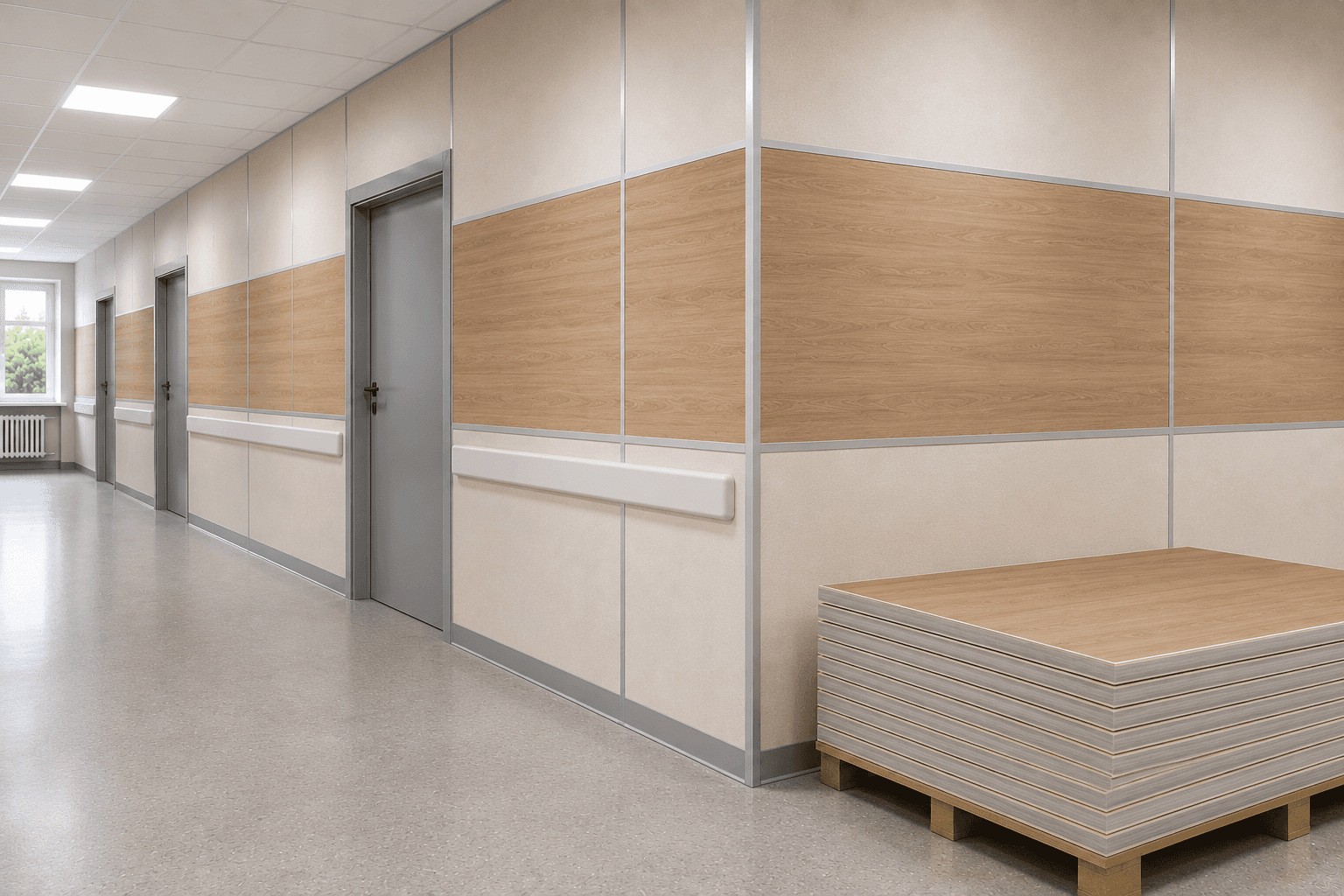
The system provides a comprehensive solution:
panels;
frame;
omega profile;
P-profile;
T-cap;
L-profile;
F-profile;
aluminum skirting board.
That is, the customer receives not just facing material.
He gets a mounting system .
And systematicity directly affects the economy.
When all elements are foreseen in advance, there is less improvisation on site. Less manual adjustments. Fewer additional operations.
Omega profile: a small detail that changes the installation
The omega profile is used to join panels into a flat plane .
This is an important point.
In traditional repairs, the geometry of the surface largely depends on the quality of the preparatory work.
In a frame system, the geometry is set by the structure itself.
The installer does not work with a chaotic surface that needs to be constantly corrected, but with a prepared system.
The panels are joined through an omega profile.
After installation, the mounting brackets are covered with decorative elements.
The result is a flat surface with controlled joint geometry.
P-profile: saving not only time, but also finishing operations
The P-profile performs a specific function.
It covers the visible screw caps when installing through an omega profile and forms a neat line connecting the panels.
This means that after installation, you don't need to return to each fastener, putty it, wait for it to dry, and re-treat the surface.
The assembly connection immediately takes on a completed appearance.
There can be thousands of such fasteners in a large facility.
And every excluded operation has an economic effect.
T-cap: when the joint becomes part of the system
The T-cover is used as a solid decorative element that covers the mounting area of the omega profile.
It hides the fasteners and forms a continuous joint line.
In appropriate technical solutions, the T-cap is also used to seal joints.
From an economic perspective, this is important for the same reason.
The fewer individual operations that need to be performed on a site, the easier it is to control deadlines and costs.
Fewer wet processes mean fewer organizational problems
Plastering, puttying, painting and other traditional processes require water, drying time and appropriate conditions.
Panel installation using frame technology largely transfers repairs to the level of dry construction .
This means no or significant reduction in wet processes, depending on the specific project.
This is especially important for operating facilities.
There's no need to turn the entire floor into a construction site just to repair one wall.
Dust-free means savings too
At first glance, dust has nothing to do with the budget.
Actually, it does.
Dust means:
cleaning;
overtime of employees;
equipment protection;
moving furniture;
risk of contamination of neighboring premises;
additional organization of the construction site.
This is especially noticeable in hospitals, schools, and administrative buildings.
The cleaner the process, the easier it is to work in an existing building.
Labor savings
Another large component of the estimate is labor.
Traditional decoration requires several specialties and consistent execution of work.
Panel mounting allows you to reduce the number of operations.
And this can reduce the complexity of the work.
It is important not to confuse this with the thesis "an installer is not needed."
Professional installation always makes a difference.
But when the system is designed correctly, the installer does not need to compensate for the material's shortcomings with complex additional operations.
Budget construction does not mean cheap construction
There is a fundamental difference.
Cheap construction seeks the lowest price.
Efficient budget construction seeks the best balance of cost, time, quality, and operation.
This is especially important for state and municipal facilities.
Budget funds cannot be assessed solely on the purchase price of the material.
You need to look at the full cost of the solution.
The total cost of the repair is more important than the price of the panel
For an objective comparison, you need to consider at least:
material + frame + fastening + labor + surface preparation + finishing + cleaning + logistics + downtime.
Sometimes a material with a lower price per square meter requires significantly more related work.
As a result, the finished wall may be more expensive.
That is why during tenders and commercial calculations it is advisable to compare not individual materials, but ready-made technological solutions .
What happens to the object after renovation?
There is another point that often remains outside the initial estimate.
Operation.
Walls in schools, hospitals, corridors, and public buildings receive significant loads.
They are washed. They are touched by furniture. They are touched by hands. They get dirty.
Therefore, the surface should not only be beautiful on the day of delivery.
It must remain practical during operation.
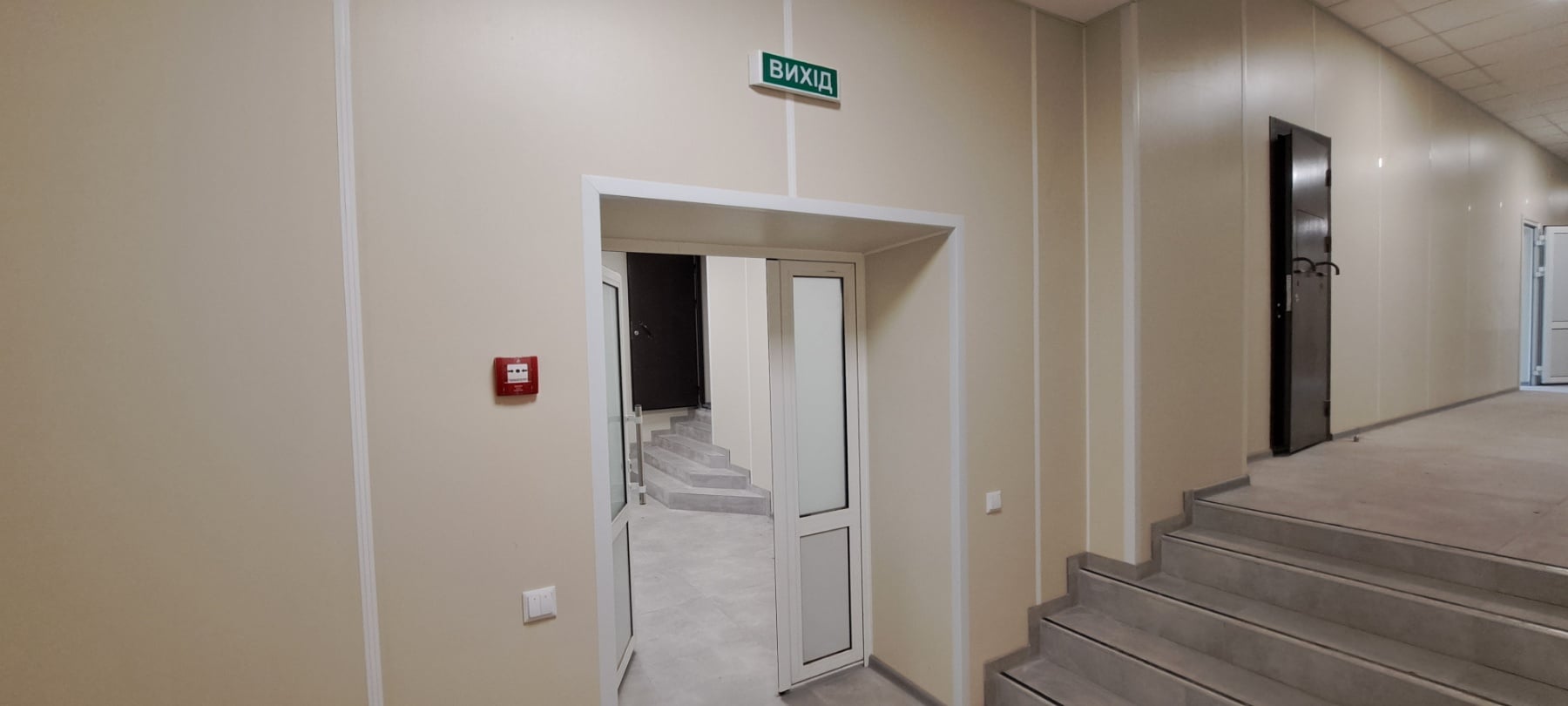
GYPSUN™ uses wear-resistant coatings that are easy to clean , which is important for rooms with regular cleaning.
Repair without stopping operations
This is one of the most practical advantages of panel technology.
Work can be organized in stages.
Today - one corridor.
After its completion, the next zone.
Then another room.
It is not necessary to decommission the entire building.
For schools, medical facilities, and administrative facilities, this approach can be of much greater value than the small difference in the cost of the material itself.
Tender economy: what the customer should see
Price is important in tender documentation.
But it should not exist separately from the technical solution.
A professional customer has the opportunity to check:
what exactly is included in the price;
what is the basis of the panel;
what fire performance class is declared;
how the installation is performed;
what profile system is used;
who is the manufacturer;
Are there real production capacities?
whether the objects are completed;
what documents are provided;
who is responsible for the result.
Then the comparison becomes fair.
Not "panel against panel", but system against system .
The manufacturer is more important than a beautiful commercial offer
Large volumes of construction require stable supplies.
If a property requires thousands of square meters, the question is not only whether the first 100 m² can be sold.
It is necessary to provide the entire volume.
Within a certain time frame.
With the same quality.
With the same color and geometry.
Therefore, it is important for the customer to know who actually manufactures the products .
Own production and warehousing facilities give the manufacturer the opportunity to better control deliveries and plan large projects.
Where savings become especially noticeable
Frame panel systems are especially interesting for objects with large wall areas.
It:
Schools and educational institutions
Speed of repair, minimization of downtime, and ease of maintenance are important.
Hospitals
The cleanliness of the process, the wear resistance of the surface, and the ability to organize the work in stages are important here.
Administrative buildings
Speed and the ability to repair premises without a long downtime are key.
Commercial premises
Here, every day of downtime has a direct financial impact.
The most expensive repair is the one that has to be redone.
A mistake at the beginning of construction is rarely cheap.
Incorrectly prepared base.
Poorly made joint.
Inappropriate profile.
Unstable mounting.
Incorrectly selected material.
At first, this may seem like a small problem.
Then the need for repair arises.
And with it - re-purchasing materials, re-working, and new downtime.
Therefore, the right system at the start is often cheaper than correcting errors after delivery.
Saving is about control, not compromise
In a good budget project, savings are not made on things that will have to be fixed later.
Save on unnecessary operations.
On idle.
On an unnecessary number of employees.
On repeat work.
On complex logistics.
At unnecessary stages of decoration.
On unsuccessful technical solutions.
That is why quick frame installation of GYPSUN™ panels should be considered not just as an alternative method of cladding.
This is a different approach to forming a renovation budget.
How much does a square meter actually cost?
This is a question worth asking before every major renovation.
Not:
"How much does a panel cost?"
AND:
"How much will the finished wall cost, including all the work?"
And one more thing:
"How much will one day of facility downtime cost?"
After that, the math becomes different.
This is where professional calculation begins.
GYPSUN™ — when savings are built into the installation method itself
The GYPSUN™ panel system combines material and installation technology.
The frame forms the foundation.
The omega profile joins the panels into a flat plane.
The P-profile covers visible mounting elements.
The T-cap forms a continuous joint line and closes the installation area.
L- and F-profiles solve internal and external corners.
An aluminum skirting board completes the lower part of the structure.
This is no longer a set of individual products.
This is a profile system designed around a specific method of mounting the panels .
Conclusion: the budget should be calculated up to the last transaction
Savings in budget construction should not turn into a pursuit of the lowest price.
Because the low price of the material can be offset by expensive work.
A cheap solution may require more workers.
A seemingly simple repair can take months.
And savings at one stage can create costs at the next.
And vice versa.
A properly selected panel system not only reduces material costs, it also reduces the number of operations, the duration of repairs, the dependence on wet processes, and the amount of associated work.
This is where the real savings lie.
Don't buy cheaper.
Make the entire finished result cheaper.
For budget construction, this is a fundamental difference.