Why Laminated Panels Are a Step Backward in Modern Interior Finishing
Laminated panels are often presented as a quick and "modern" solution for finishing, but behind their external appeal lie systemic flaws — from fire risks to operational complexity. In this article, we examine why it's worth rejecting this material in favour of non-combustible alternatives.
The construction sector is constantly evolving. Requirements for materials are becoming stricter: fire safety, environmental friendliness, durability, compliance with DBN, and installation speed without compromising quality. Against this backdrop, laminated panels appear as a simplified, marketing-driven solution. However, real operational practice demonstrates otherwise — this is a material of compromises that eventually become problems.
1. Fire Hazard — The Primary Risk
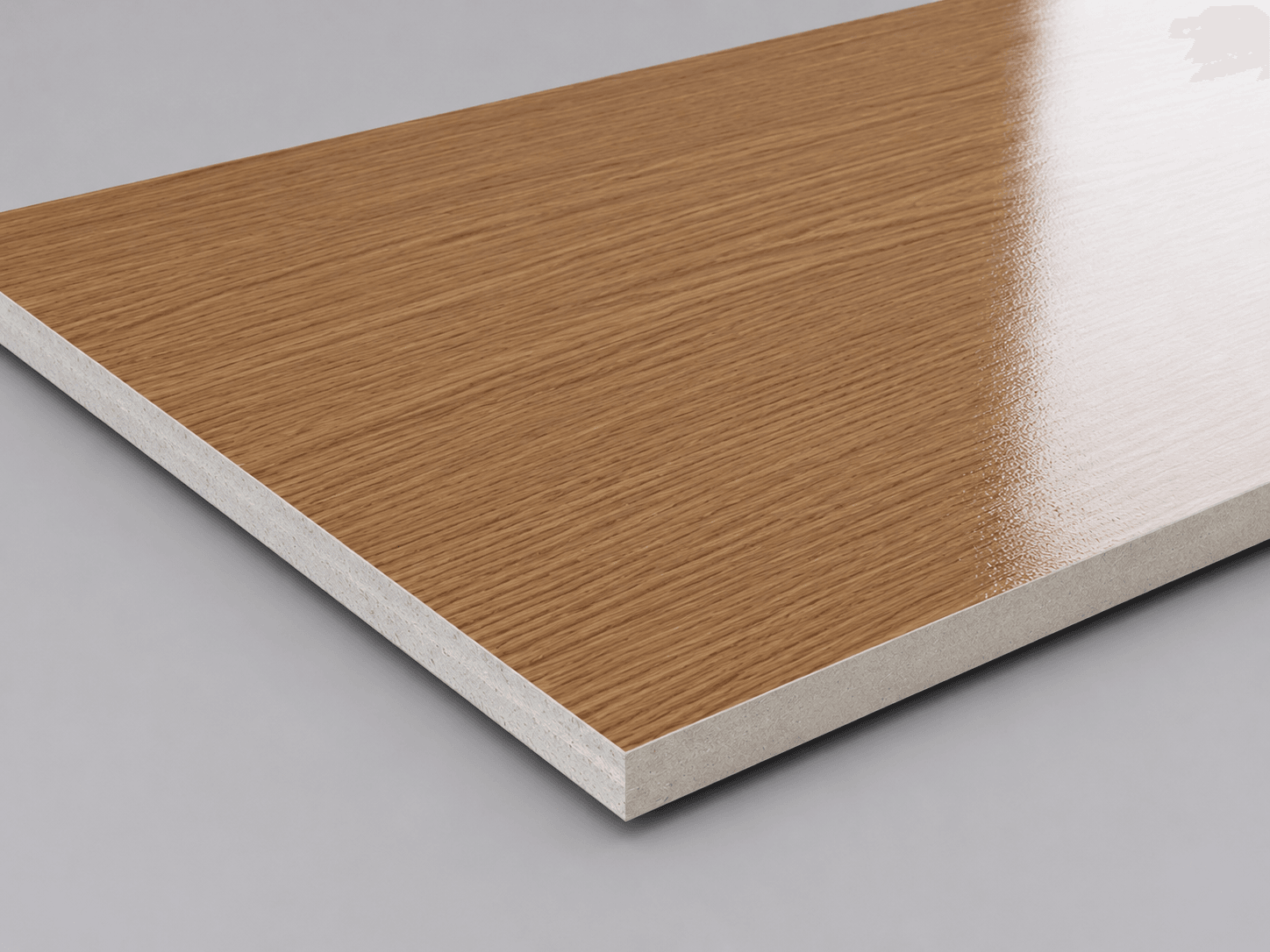
Laminated panels typically have a polymer coating (PVC film or other synthetic layer). In the event of a fire, such materials:
support combustion;
release toxic products;
facilitate rapid fire spread;
hinder people's evacuation.
In educational facilities, hospitals, business centres and residential complexes, using materials with combustible components is a risk that no cost saving can justify. Especially when large wall areas are involved.
Modern facilities require non-combustible or low-combustible bases. A laminated surface in itself does not make the system safe. Conversely — it often conceals a weak substrate and creates an illusion of protection.
2. The Illusion of Durability
Manufacturers often claim resistance to scratches and moisture. But in practice:
the film detaches over time;
joints become vulnerable to moisture;
mechanical damage cannot be repaired locally;
when a local defect occurs, the entire element often needs replacement.
In commercial premises this means constant repair costs and loss of aesthetics. In schools and hospitals — additional operational risks.
A material that cannot be properly restored is not a long-term solution.
3. Environmental Concerns
Modern construction standards orient towards safe materials with minimal impact on indoor air quality. Laminated panels may:
contain adhesive systems with volatile compounds;
emit odours;
create additional strain on indoor climate.
In enclosed spaces this is particularly critical. Requirements for air quality in hospitals, childcare facilities and offices are constantly increasing. Materials must be stable, inert and safe.
4. Full-Cycle Economics: Cheaper Today — More Expensive Tomorrow
At the purchasing stage, laminated panels may seem like an affordable option. But if you account for:
installation risks,
need for surface preparation,
repair complexity,
replacement due to damage,
loss of operational properties,
— the total cost of ownership rises.
In large projects (business centres, shopping malls, schools, medical facilities) a long-term strategy always outweighs short-term savings.
5. Architectural Limitations
Laminated panels restrict design:
difficulty integrating engineering systems;
problems with concealed utilities;
limited adaptation to non-standard solutions;
poor repairability.
Modern interiors demand flexibility, modularity, and the ability to transform quickly. Rigid decorative solutions with film do not meet these requirements.
6. Compliance with Building Codes
In projects where compliance with DBN and fire safety requirements is critical, the use of non-combustible bases is a priority. Laminated systems often create additional coordination issues, complicate expert review and may result in approval refusal.
For public facilities this is particularly critical.
7. Why the Future Belongs to Non-Combustible Solutions
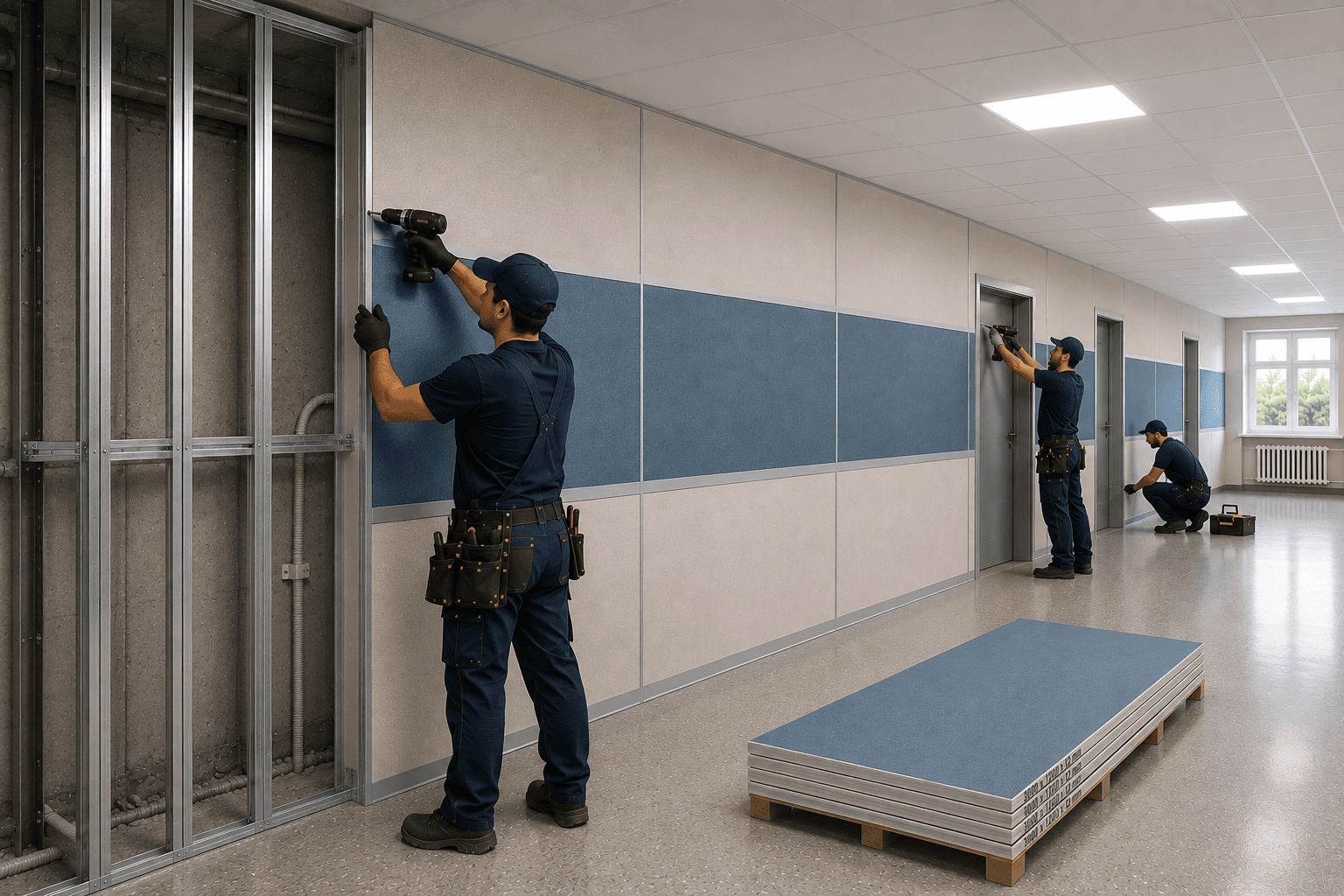
Modern panel systems based on GKL, GVL and other non-combustible materials provide:
geometric stability;
high fire safety;
paintability;
repairability;
standards compliance;
long service life;
minimal operational costs.
This is a solution that does not require masking defects with film.
Conclusion
Laminated panels are a compromise between external appearance and real requirements for safety, durability and regulatory compliance. In most modern projects, they fail to meet strategic construction objectives.
If a facility is designed for years of operation, high foot traffic, and compliance with fire standards — material with synthetic lamination cannot be a base solution.
Future construction must be grounded in:
safety,
environmental friendliness,
durability,
full-cycle economic efficiency,
regulatory compliance.
And these principles must determine material selection.