
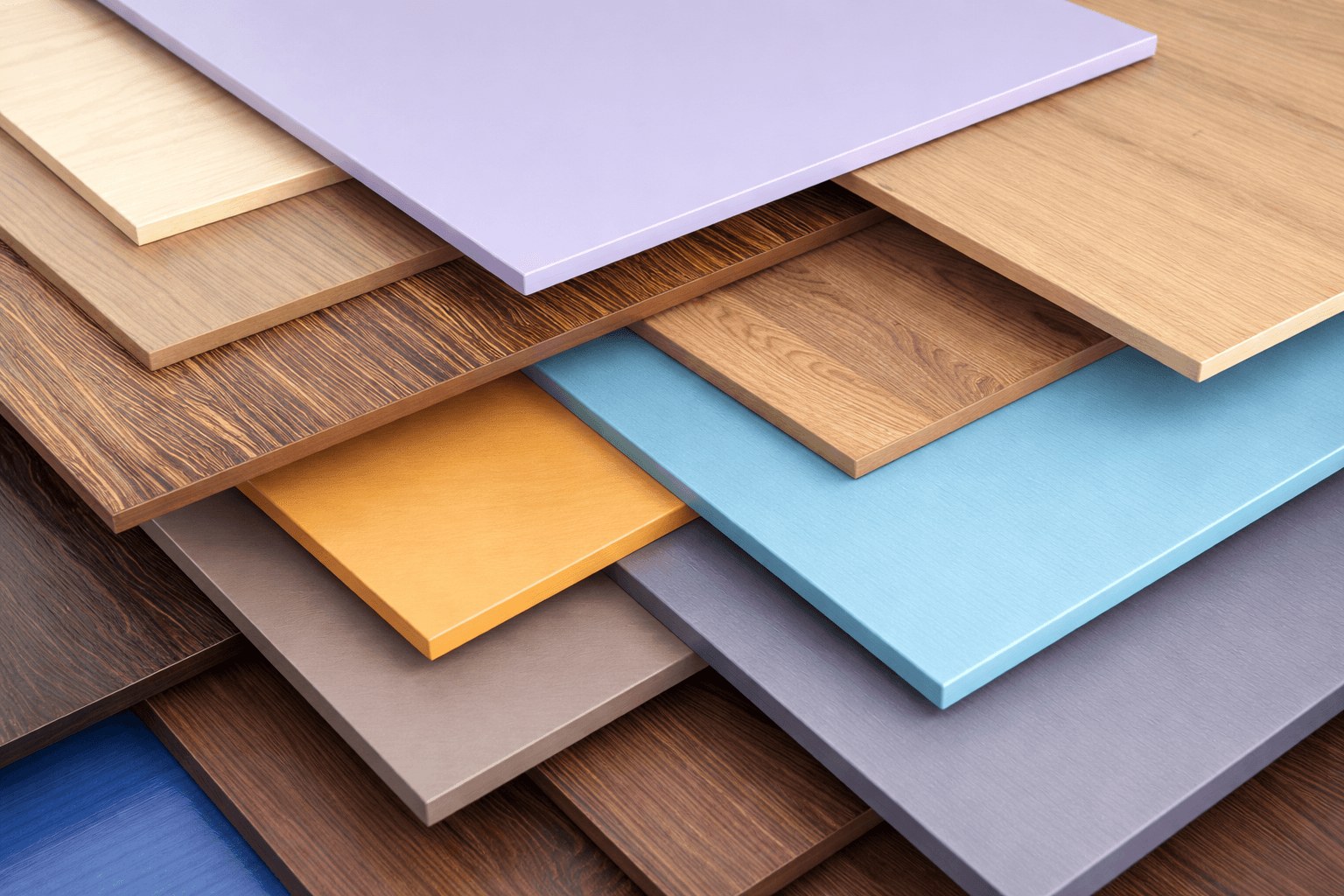
Materials for Walls: Between Aesthetics, Safety and Operational Reality
Analysis of modern wall materials in commercial and public buildings. Why material choice is not just design, but responsibility.
Introduction: the wall as a point of responsibility
In modern construction, the wall is no longer just a surface. It has become part of a building's safety system, acoustics, durability and even economics.
Just ten years ago, the main criteria for selection were price or appearance. Today, this is not enough. Architects and developers must account not only for installation, but also for the consequences of use: repairs, replacements, wear and risks.
This is why four solutions have come into focus: MDF, laminated panels, HPL and gypsum systems.
MDF: convenience with limits
MDF remains one of the most popular materials in interior finishing. It is easy to cut, form, paint. It gives design freedom and quick results.
But this convenience has its limits.
In real operating conditions, MDF reacts quickly to moisture, mechanical stress and temperature changes. It works well in controlled spaces, but weakens where usage intensity increases.
Therefore, MDF is more of an interior material than an infrastructure material.
Laminated panels: a compromise that looks convincing
Laminated panels create the impression of a finished, complete solution. They are quick to install, offer a wide choice of textures and look contemporary.
This explains their popularity in commercial spaces.
But beneath the decorative layer remains a base that does not change its properties. Joints remain vulnerable, and wear in high-traffic zones appears quite quickly.
Laminated panels are a compromise between speed and durability.
HPL: material designed for load
HPL is a different category. It is not chosen by accident. It is chosen where the material must work continuously.
These are hospitals, laboratories, shopping centres, public spaces with high-traffic loads.
HPL withstands moisture, chemicals, impacts and time. But there is a price to pay—both in cost and installation complexity.
This is a material without illusions: it either justifies itself completely, or it is not used.
Gypsum systems: invisible engineering
Unlike decorative materials, gypsum systems do not attempt to draw attention.
Their logic is different—stability, safety, predictable structural behaviour.
This is a solution that works not at the 'surface' level, but at the level of the building as a system.
This is why such materials are used in projects where a mistake in material selection carries a high cost.
Comparison without marketing
MDF—controlled comfort
Laminated panels—quick visual result
HPL—industrial durability
Gypsum systems—engineering stability
None of these materials is universal. The problem arises when universality is ascribed to it.
Economics of choice: what the client actually pays
The formula for cost in construction has changed long ago.
Now it is not just the material price. It includes:
installation
maintenance
repairs
downtime of the facility
replacement within 3–5 years
And it is precisely here that the cheapest solutions often become the most expensive in the long term.
Conclusion: when material ceases to be just material
The modern approach to construction is gradually moving away from the concept of 'finishing'. In its place comes the concept of 'wall solution system'.
In this logic, the final choice is made not between colours or textures, but between risk and stability.
Summary: GYPSUN™ as an engineering solution of a new level
At the final stage of comparison, it becomes clear: when safety, stability and predictable operation become priorities, decorative materials recede into the background.
This is where next-generation gypsum engineering systems are applied, among which GYPSUN™ emerges as the logical completion of this approach.
This solution is chosen not for its external effect, but for its function:
fire safety
structural stability
quick installation
reduction of operational risks
GYPSUN™ in this context is not an alternative to finishing, but a transition to a different level of thinking in construction.


